Primary Military Drones in Ukraine’s Service
Bayraktar TB2: The Turkish Workhorse
When military analysts first asked which drones are used by Ukraine, the answer invariably included the Bayraktar TB2. This Turkish-made unmanned combat aerial vehicle anchored the country’s early defence, flying sorties that disrupted advancing armoured formations.
The TB2 carries a payload of four laser-guided smart munitions, allowing it to methodically eliminate command vehicles and artillery pieces. Its 27-hour endurance and 9,000-metre ceiling kept it beyond enemy reach while Ukrainian crews gathered reconnaissance and struck targets in the same mission.
Switchblade Loitering Munitions from the US
When the conversation shifts to which drones are used by Ukraine, the American Switchblade loitering munitions deserve their own chapter. Unlike conventional UAVs that return to base, these expendable systems fly toward a target and detonate on impact. The Switchblade 300 serves as a precision strike tool for light targets, while the Switchblade 600 packs a warhead large enough to disable main battle tanks. Ukrainian operators receive real-time video feeds, allowing them to abort a strike if the situation changes. Key characteristics include:
– Compact launch tubes that fit in a backpack
– Quiet electric propulsion for low acoustic signature
– Rapid deployment under two minutes
These attributes make Switchblades a vital asset for frontline units facing fast-moving Russian offensives. Their presence in Ukraine’s inventory underscores how modern warfare now depends on expendable, precise aerial firepower.
Ukrainian R18 and Punisher Drones
Domestic engineering sustains the fight when foreign supplies run thin. The R18, an octocopter, operates as a flying mortar system for Ukrainian crews. It hovers over fixed positions and drops modified grenades with consistent precision. The Punisher, by contrast, is a fixed-wing platform built for silent night strikes against supply depots and command nodes.
The two systems serve distinct tactical roles:
- The R18 carries heavy ordnance across short frontline distances, supporting infantry in static trenches.
- The Punisher flies preprogrammed routes using inertial navigation when GPS signals are jammed.
For anyone tracking which drones are used by ukraine, these local designs matter as much as imported hardware. They are cheaper to produce, faster to repair, and tailored to the realities of electronic warfare.
FPV Attack Drones: Low-Cost Killers
FPV drones have turned the battlefield into a stark equation of cost versus consequence. These small, agile quadcopters carry explosive payloads that cost a fraction of a guided missile, yet they can find a target through a window or into a trench with chilling accuracy.
The psychological weight falls on the operator. They sit kilometers from the fight, staring at a screen, guiding a machine toward a human being. The distance does not dull the moral burden.
Which drones are used by ukraine in this role? Mostly adapted racing frames, civilian technology pressed into military service. They are cheap to replace and easy to modify.
Key tactical advantages include:
– Extreme precision in skilled hands
– Rapid production and field adaptation
– Resilience against jamming through manual control
Every sortie is a short, intense conversation between technology and mortality.
Captured Russian Drones Repurposed for Ukraine
When Russian soldiers abandon their positions, they often leave useful equipment behind. Orlan-10 drones, Zala surveillance units, and other reconnaissance models have become impromptu donations to the Ukrainian war effort. Ukrainian technicians strip them, reflash the software, and send them back toward the original owners with fresh intelligence-gathering missions.
This practice answers the question of which drones are used by ukraine with a touch of irony. Some of the most effective reconnaissance platforms in Ukrainian service were manufactured in Russia.
The repurposing process is surprisingly simple:
1. Remove the Russian transponder and encryption module.
2. Install Ukrainian control systems and data links.
3. Reassign the drone to a Ukrainian unit.
What the Russians lose in hardware, they lose twice in information. Every captured drone exposes their own logistics and communication habits.
Surveillance and Reconnaissance Drones
AeroVironment RQ-11 Raven: Small-Scale Eye in the Sky
The RQ-11 Raven weighs just 1.9 kilograms, yet it gives Ukrainian soldiers a persistent eye over the battlefield. For anyone tracking which drones are used by Ukraine, this hand launched system ranks among the most accessible options.
The Raven stands out for its simplicity. A soldier can assemble it in minutes and launch it by hand. The electric motor operates quietly, reducing detection risk near Russian positions.
Each flight lasts about 90 minutes with a range of ten kilometers. Typical missions include:
- Confirming enemy staging areas before strikes
- Monitoring roads for supply convoys
- Assessing damage after artillery fire
This capability puts reconnaissance directly in the hands of platoon level units, giving them immediate situational awareness without waiting for higher command.
Leleka-100: Ukrainian Reconnaissance Workhorse
The Leleka-100 has become a fixture in Ukrainian reconnaissance operations. This domestically built, fixed wing drone launches from a compact catapult and lands via parachute, giving units a reliable eye beyond the treeline. I have followed its battlefield record closely.
The system transmits live video to ground controllers, who then direct artillery or alert infantry units to advancing columns. Its quiet electric motor and 90 minute endurance make it difficult to detect during extended loiter.
Typical missions include:
- Mapping enemy trench networks
- Observing vehicle movement near supply routes
- Confirming target coordinates for precision strikes
When analysts ask which drones are used by Ukraine, the Leleka-100 appears consistently in front line reports. It does not carry munitions, yet its contribution to battlefield awareness is significant.
Fury: Lightweight Tactical UAV
Fury is a lightweight tactical UAV built for one purpose: sustained observation without giving away its position. Weighing around 6 kilograms, it launches from a pneumatic catapult and flies a quiet electric profile that keeps ground crews out of harm’s way.
When analysts ask which drones are used by Ukraine, Fury belongs on the list. I have reviewed footage from this system, and the image clarity is impressive for a 6 kilogram airframe. The electro-optical payload streams live video to operators up to 30 kilometers away, allowing artillery teams to adjust fire with real accuracy.
Typical Fury missions include:
– Verifying strike damage on enemy positions
– Watching supply routes for convoy movement
– Mapping defensive lines before an advance
Fury’s 2 hour endurance lets it loiter far longer than most small systems. That persistence matters! For anyone following which drones are used by Ukraine, Fury demonstrates that intelligence gathering carries strategic weight. Its contribution is significant even without a warhead.
Civilian Drones Used for Battlefield Recon
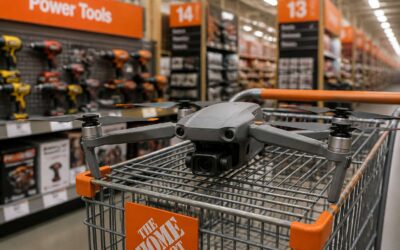
Civilian quadcopters occupy a space that military-grade systems cannot reach. When soldiers ask which drones are used by Ukraine, the answer often surprises them. A commercial DJI Mavic 3, purchased for a few thousand rand, delivers real-time video from the treeline ahead.
These drones lack the endurance of Fury or the strike capability of an FPV, yet they offer essential value: immediate observation. A platoon leader can launch one from a trench and inspect the next field within minutes. The payload remains a standard camera, but the information arrives when needed.
- Scanning trench lines before a patrol moves
- Checking for ambushes along a tree line
- Confirming enemy positions before calling artillery
The limitation is range and battery. Most civilian units fly for 20 to 30 minutes and stay within visual line of sight. For the soldier on the ground, that short window often decides the outcome. This remains a critical part of which drones are used by Ukraine in the reconnaissance role.
Signal Intelligence Drones for Electronic Warfare
Radio waves decide the battlefield before a single shot lands. Electronic warfare is a contest of interception and jamming, and drones now perform the reconnaissance in this domain. When analysts ask which drones are used by Ukraine, they rarely mean strike aircraft. The more revealing answer lies in surveillance platforms like the Shark, a fixed-wing system that maps artillery positions with its optics.
Signals intelligence drones operate differently. They listen. A quadcopter carrying a direction-finding antenna can triangulate a radio call, and within minutes an artillery battery learns where that voice originated. The outcomes include:
- Pinpointing command posts
- Identifying jammer locations
- Tracking convoys by radio chatter
This work stays out of combat footage, yet it determines the tempo of every offensive. Ukraine’s drone fleet spans many roles, but the listening drones remain the least visible and the most essential.
Commercial and Hobbyist Drones Adapted for War
DJI Mavic Series: From Photography to Bombing
In better days, the DJI Mavic series captured the polite rituals of weddings and weekend hikes. In Ukraine, these same quadcopters have abandoned their role as passive observers. Volunteer units and regular forces now fit Mavics with improvised release claws, turning a photographer’s gadget into a bomber that costs less than a box of artillery shells. When outsiders ask me which drones are used by ukraine, the Mavic remains a staple for reasons of supply, price, and sheer numbers.
Adaptation has followed a brutal but practical pattern:
- Anti-tank grenades hung from basic wire hooks
- 3D printed fins for wobble free drops
- Reduced payloads traded against extended flight time
The result is a weapon that retains a consumer price point and an easily sourced stock of spare parts. That accessibility keeps the Mavic flying long after purpose built munitions have been expended, a strange second life for a camera drone.
Custom FPV Racing Drones in Kamikaze Roles
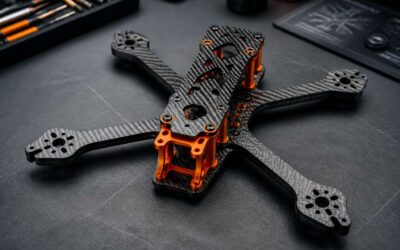
The question of which drones are used by ukraine now reaches into the garage workbench. Racing quadcopters, built to snap through forest gaps at speed, fly with different cargo these days. The FPV racing scene donated pilots, frames, and a particular kind of nerve. These machines hug the treeline and drop into the vulnerable seam of an armored vehicle.
The adaptation stays hands-on. I have watched volunteer crews solder and test in cold garages. A pilot who once chased finish gates now guides a frame packed with explosives. Custom builds lean on modular parts:
– Reinforced carbon frames that survive hard launches
– Analog video transmitters for lower signal lag
– Battery packs tuned for a quick sprint rather than endurance
What a strange second act for a hobbyist’s toy! When outsiders ask which drones are used by ukraine, the answer is often a community of racers who rewired their passion for a more brutal course.
3D-Printed Drones for Rapid Production
Commercial drones arrive in Ukraine without military intent. Agricultural sprayers, survey quadcopters, and hobbyist kits all get reworked for the battlefield. Workshops print new frames overnight, swapping factory shells for reinforced bodies that carry military payloads. The supply chain depends on filament spools and soldering irons rather than factory assembly lines.
3D printing reshapes the answer to which drones are used by Ukraine. A cracked arm or shattered motor mount can be remade within hours. Designs circulate through Telegram channels, shared between volunteers who refine each iteration. This rapid production method lets units adapt faster than any traditional defence contractor.
- Printed launchers for grenade drops
- Custom battery mounts for heavier loads
- Reinforced camera housings for combat optics
Every printed frame is a test, and every test feeds the next design. The cycle keeps moving because the demand never stops.
Payload Modifications for Grenade Drops
Commercial drones arrive on the front lines with cameras and gimbals, but soldiers need more than aerial photography. The question of which drones are used by Ukraine often comes down to how easily a civilian frame accepts a military payload. Attachment points are drilled into landing gear. Wiring harnesses connect to flight controllers. A simple servo mechanism releases a grenade on command.
The most common modification involves a drop system triggered by the remote control. Volunteers design and share these release mechanisms online, and units replicate them with 3D printers or hand tools.
- Spring loaded clamps for standard grenades
- Magnetic release systems for improvised munitions
- Toggle switches wired to the camera shutter button
These payload modifications turn hobbyist aircraft into precision bombers. Military drones require months of integration, yet a commercial quadcopter can be fully adapted within days. The answer to which drones are used by Ukraine includes these civilian machines, proving that necessity drives innovation faster than traditional procurement.
Artillery Targeting with Commercial Drones
An artillery unit without accurate spotting is shooting blind. On the open fields of the eastern front, that spotting comes from a small commercial quadcopter. The answer to the question of which drones are used by Ukraine for fire correction is often a stock model with a good camera. Operators use them to track shell impacts and relay adjustments to the gun line. A thermal sensor helps find hidden mortar teams. The speed of correction is unmatched by older methods. Pilots learn the terrain intimately. They watch for the dark puff of a muzzle blast.
Key duties for these aerial observers include:
- Confirming target grid coordinates before the first round.
- Measuring burst deviation to give precise correction data.
- Maintaining overwatch for counter-battery radar threats.
The 40-minute endurance is short, but the effect is immense. When units need to know which drones are used by Ukraine for this work, they pick reliability over specs. The civilian hardware holds up against jamming and rough landings.
International Drone Donations and Purchases
US Military Aid Packages and Drone Transfers
When the war began, Ukraine’s drone supply was a patchwork of volunteer fundraising and ad hoc purchases. Today, the country relies on a structured pipeline of international drone donations and purchases, with the US military aid packages providing the most visible influx. The question of which drones are used by Ukraine often starts with American systems, such as the Scan Eagle and Puma, which arrive through Presidential Drawdown Authority.
- International consortia, led by Poland and the Baltic states, fund multirotor reconnaissance platforms.
- Private donors in South Africa and elsewhere purchase commercial FPV frames in bulk.
- Drone transfers from allied militaries include refurbished Soviet-era systems that still work with legacy ground stations.
Beyond official channels, Ukraine’s defence procurement agency buys directly from manufacturers, cutting months of bureaucracy! Drone transfers from partners like the UK and Australia have added long-range strike capability, while US packages focus on interoperability. When I track which drones are used by Ukraine, the answer changes monthly, as battlefield losses and rapid innovation force continuous adaptation.
European Contributions: Polish, British, and Baltic Support
European support reshapes which drones are used by Ukraine more than most analyses acknowledge. Poland and the Baltic states fund multirotor reconnaissance platforms that loiter quietly along the forward edge of battle. Britain supplies long-range strike drones, a capability that complements the American systems arriving through Presidential Drawdown Authority.
I have watched the procurement path evolve into something surprisingly direct. Ukrainian operators sit with European engineers and modify airframes based on weekly battlefield reports. This shortens the cycle between a flaw being discovered and a fix reaching the front.
– Polish Warmate loitering munitions arrive in steady shipments.
– British donations include heavy-lift platforms for logistics.
– Baltic states provide thermal imaging systems for night operations.
When the question of which drones are used by Ukraine comes up, European contributions now represent a substantial share of the total inventory.
Australian and Canadian Drone Deliveries
Australia and Canada move quietly through this conflict’s supply lines. Their drone contributions rarely surface in official briefings, yet they shape which drones are used by Ukraine on the front lines. Canadian engineers install electronic warfare pods onto commercial airframes, turning civilian designs into signal hunters. Australian teams manufacture long-endurance platforms, built for maritime persistence and adapted for the Black Sea’s contested airspace.
- Canadian-built EW variants fly night patrols over Kharkiv’s northern approaches.
- Australian loitering systems provide target illumination for artillery units.
These machines arrive without ceremony. By the time analysts catalogue another shipment, the answer to which drones are used by Ukraine has already changed again.
Ukrainian Crowdfunding Initiatives for Drone Procurement
When state aid lags, civilians close the gap. International donors purchase drones directly from manufacturers and route them through established supply chains. Ukrainian crowdfunding initiatives have raised millions, buying systems that official budgets cannot cover. The answer to which drones are used by Ukraine increasingly depends on private money.
One foundation alone funded over 5,000 FPV units last year. Another acquired reconnaissance platforms for territorial defense units. These purchases bypass bureaucracy entirely.
- Volunteers negotiate bulk pricing with component suppliers
- Logistics teams handle customs and transport to the front
- Units receive configured drones within weeks
This parallel supply network sustains the battlefield while governments deliberate. Every contribution reshapes which drones are used by Ukraine, one night mission at a time.
Domestic Manufacturing Scaling: From Hobby to Industry
International donors have turned procurement into a fast-moving pipeline. Charities from Japan and South Korea buy reconnaissance quadcopters and ship them through Poland. These transactions take days, not months. Private military analysts estimate that foreign donations now cover roughly a third of Ukraine’s drone inventory.
Meanwhile, domestic manufacturing has scaled dramatically. Two years ago, hobbyists assembled frames at kitchen tables. Now, the same builders manage licensed production facilities. Civilian engineers refine motor configurations and battery layouts.
- Airframe production has moved to purpose-built workshops
- Component suppliers deliver locally within days
- Training programs turn volunteers into assembly technicians
This industrial expansion shortens the supply chain. More Ukrainian units fly domestic designs, so the answer to which drones are used by Ukraine increasingly depends on internal capacity. That is a decisive shift!
Impact and Effectiveness of Drones in the Conflict
Strategic Advantages of Drone Warfare
The question of which drones are used by Ukraine matters less than what their widespread deployment has done to the nature of combat. These machines have collapsed the distance between decision and consequence. A soldier watching a live feed from a grenade drop experiences a strange detachment, a moral buffer that changes how war is processed.
Strategic advantages are measurable in ways that rewrite doctrine.
- Persistent surveillance denies the enemy any respite, forcing constant movement.
- Low unit cost enables saturation attacks that exhaust air defences.
- Instant battlefield awareness shortens the kill chain from minutes to seconds.
When analysts ask which drones are used by Ukraine, they often overlook this deeper shift. The weapon itself is secondary to the cognitive burden it imposes. Every shadow could be a camera, every buzz a portent of ordnance. That uncertainty, more than any single airframe, is the true strategic asset.
Challenges and Countermeasures: Jamming and Interception
The electronic battlefield has become a strange arms race. Russian forces responded to Ukrainian drone swarms with a dense network of jamming systems that sever the radio link between operator and aircraft. This forced Ukrainian units to adapt quickly, relying on preprogrammed flight paths and frequency hopping to complete missions. Interception remains a separate challenge. Cheap FPV drones are poor targets for expensive missiles, so both sides now deploy net-equipped drones and shotgun-armed patrols. The answer to which drones are used by Ukraine increasingly depends on electronic resilience as much as payload capacity.
Challenges on this front include:
– GPS spoofing that silently sends aircraft off course
– Radio jamming that cuts live video feeds mid-strike
– Kinetic interceptors and net capture systems
The impact is measurable. Ukraine has lost thousands of drones to these countermeasures, yet the sheer volume of launches still overwhelms defenders. Effectiveness has become a simple numbers game.
Future Drone Technologies on the Horizon
The math is brutal and simple. A $500 drone that damages a $5 million vehicle is a trade any accountant would approve, especially when Ukraine produces thousands monthly. Jamming has forced a shift toward autonomous terminal guidance, where the drone locks its target before the radio link dies.
Future systems are already adapting. Fiber-optic tethered drones now allow video feeds immune to jamming. AI-assisted target recognition will soon let FPV drones fly the final stretch without a pilot at all. The answer to which drones are used by Ukraine will keep shifting, but the trend is clear:
- Smarter onboard computers
- Jam-resistant data links
- Swarm coordination software
Each upgrade makes intercepting a single drone harder, and the maths favours the side with more production lines.
Lessons for Modern Militaries Worldwide
The conflict has turned drone warfare from an experimental concept into a grim accounting exercise. Every time a Ukrainian operator guides a cheap FPV into a tank’s turret, the global military calculus shifts. The question of which drones are used by ukraine matters less than the systemic lesson: adaptive production and quick iteration defeat expensive, slow development programs.
Militaries worldwide are absorbing this with urgency. Their adaptation includes:
- Battalion-level drone units becoming standard
- Jamming-resistant navigation as a procurement priority
- Simulator-based training replacing repetitive flight hours
The effectiveness appears in the network around the airframe, not in the airframe alone. Ukraine’s success forces every army to reconsider its own assumptions. This capability now sits at the core of modern combat!


0 Comments