Understanding Multi-Rotor Aerial Platforms
Evolution From Simple Toys to Advanced UAVs
A flight controller that once struggled to keep a plastic toy level now manages delivery logistics, agricultural surveys, and cinematography. The jump from rudimentary hobbyist gadgets to sophisticated aerial workhorses happened in less than a decade. Early models required constant manual correction, often crashing into the nearest tree, whereas modern systems use complex algorithms to maintain perfect stability.
This progression involved a shift in hardware and software. The build quality of platforms like osa quadcopters now incorporates industrial grade materials and redundant systems. The consumer market still exists, but the professional sector drives innovation. Consider the differences:
– Early versions had fixed pitch rotors and no GPS.
– Current models feature intelligent battery management.
– Modern units include obstacle avoidance sensors.
– Advanced software supports automated flight paths.
The flying experience changed completely. A pilot today monitors a mission plan on a tablet rather than wrestling with a transmitter. This transformation makes the sky a viable workspace. For a business in South Africa, using osa quadcopters for inspections or mapping offers a clear advantage, reducing risk and operational cost. These are not your childhood toys. They are precise data collection tools, and they are redefining what we can accomplish from above.
Core Anatomy: Frames, Motors, ESC, and Propellers
One loose ESC connection can turn a routine inspection into an expensive pile of spare parts. Every multi-rotor aerial platform relies on four core components. The frame provides structural rigidity, usually from carbon fiber or aluminium. A soft frame transmits vibration to the sensors, which ruins the flight data. That is why osa quadcopters use stiff chassis designs.
The motors and electronic speed controllers work as a pair. The ESC interprets the flight controller’s signal and adjusts power to each motor. Response time matters! A lag causes erratic movement. Propellers convert that motor speed into thrust. Pitch, diameter, and material affect efficiency and noise.
- Frames: stiffness over weight
- Motors: torque for quick changes
- ESCs: fast response prevents wobble
- Propellers: balanced sets reduce vibration
These four elements must work together. A single faulty component leads to unstable flights and frequent repairs.
The Role of Flight Controllers and IMU Sensors
Every second, an IMU in a modern multi-rotor measures rotational changes across three axes thousands of times. Without this constant stream of data, a drone would drift with the wind. The flight controller reads these measurements and calculates micro adjustments to each motor.
In osa quadcopters, the IMU works with a barometer and a magnetometer to maintain a steady hover. The accelerometer detects linear motion while the gyroscope senses angular velocity. Sensor fusion combines these inputs into a single reliable attitude estimate.
- Accelerometer for tilt and acceleration
- Gyroscope for rotation speed
- Magnetometer for heading reference
The controller executes corrections dozens of times per second. That rapid loop keeps the platform balanced. A slow sensor or laggy processor makes the drone feel unstable. For any osa quadcopters pilot, understanding this loop is essential.
How GPS and Autonomous Features Enhance Flight
South Africa’s open skies are a demanding theatre for any multi-rotor. A human pilot can adjust to a squall over the Highveld with instinct, but a machine must instead lean on a constellation of orbiting satellites. This is where GPS and autonomous features elevate the platform from a radio controlled hobby into a serious aerial tool.
GPS grants the aircraft a form of spatial memory. It knows where it is, where it has been, and where it ought to go. Autonomy then takes that awareness and runs with it. Consider the quiet routines it handles:
- Returning home before the battery gives out
- Holding a precise position against a stiff breeze
- Tracing a survey grid without wavering
These capabilities do not diminish the pilot’s role, they refine it. For osa quadcopters, such features mean less time wrestling with the controls and more time reading the landscape. A pilot becomes an observer, which is exactly how it should be.
Choosing Components That Match Your Flying Style
Frame Sizes: From Micro to Full-Sized Workhorses
Nearly 12,000 South African farmers now use drones for daily field assessments. Choosing the right frame size for your osa quadcopters matters more than raw power. A micro frame suits quick inspections and tight spaces, like checking windmill towers or water pipes. A full-sized workhorse carries multispectral sensors or spray systems across large Free State maize fields.
I have seen too many pilots fly heavy rigs for light work. Racing and close-range flying favour smaller, agile frames. Agricultural mapping and delivery need stability and endurance.
- Micro frames: 3 to 5 inches, agile and quick
- Medium frames: 5 to 7 inches, balanced versatility
- Full-sized frames: over 7 inches, heavy lift capacity
Weight affects battery life, controller tuning, and wind resistance. A heavy frame with a small motor will struggle in the afternoon Karoo wind. A light frame overloaded with sensors will feel twitchy. Match each component to the task, not to the trend. Build your osa quadcopters around the work they will actually do.
Material Matters: Carbon Fiber vs. Aluminum vs. Plastic
Three out of four broken osa quadcopters I have repaired failed from a material mismatch. Carbon fiber suits high winds and long flights. Aluminum handles crashes, but its mass drains batteries. Plastic works for calm indoor tasks until UV makes it brittle.
Your flying style dictates the frame. Racing over the Highveld needs carbon fiber. Payload work over gravel roads prefers aluminum. Quick inspections inside sheds tolerate plastic. Each choice changes how the craft feels in the air.
- Carbon fiber: stiff, light, expensive
- Aluminum: tough, heavy, heat conductive
- Plastic: cheap, flexible, heat sensitive
Material choice links directly to rotor size and motor power. A light plastic frame with strong motors becomes twitchy. A heavy aluminum frame with weak motors struggles in wind. When they align, your osa quadcopters perform predictably.
Motors and Propellers: Balancing Power and Efficiency
Motors and propellers determine how your osa quadcopters behave in the air. A high-thrust motor with a steep prop delivers rapid acceleration but consumes power quickly. A slower motor paired with a wider blade produces steady lift, ideal for surveying farmland around the Vaal.
The balance between these parts is often misunderstood. I have watched pilots bolt on aggressive propellers to chase speed, only to watch their batteries drain in minutes. Others underpower their craft to extend hover time, leaving it vulnerable to wind.
- High-KV motors with small props suit sprinting and acrobatics.
- Low-KV motors with large props favor endurance and payload work.
- Medium combos work for general patrols, but expect compromise.
Each gram of thrust alters handling. When the motor and prop match your flying style, osa quadcopters become dependable tools rather than frustrating experiments.
Battery Selection and Charge Management for Extended Air Time
Once thrust matches your flying style, the next choice for osa quadcopters is the battery. Pick a pack with a C rating above your peak current draw. Underestimating this causes voltage sag, which triggers low battery failsafes early. Capacity matters, but heavier batteries alter handling. I prefer matching flight time to mission length, not maxing out capacity.
Charge management determines how many seasons your osa quadcopters batteries survive. A balancing charger and a fireproof bag are non-negotiable. Charge at 1C for daily use; fast charging damages cells. Store packs at 3.8 volts per cell. For extended air time, one spare pack beats two gimmicks.
Battery selection also involves physical fit. Check dimensions against your frame. Here are the essentials:
- Confirm connector type and wire gauge.
- Set a cutoff voltage at 3.5 volts per cell.
- Keep batteries warm before flight in cooler Vaal mornings.
Propulsion Systems: Brushed vs. Brushless
Racing at Vanderbijlpark demands instant response. Surveying the Vaal requires endurance. Your flying style fixes the propulsion system for osa quadcopters before anything else. Brushed motors offer low cost and simplicity, but they wear quickly under hard acceleration. Brushless systems cost more, yet they deliver the responsive torque that freestyle pilots crave.
Consider your typical flight envelope:
- Freestyle and racing need high KV brushless motors.
- Slow aerial photography tolerates brushed efficiency.
- Heavy payloads demand brushless power density.
Matching the ESC to the motor’s continuous current rating prevents thermal shutdown. A mismatch explains most mid-flight failures. The mission profile dictates the correct pairing.
Setting Up for Rock-Solid Aerial Photography
Choosing the Right Camera and Mounting System
A single blurred frame ruins an entire sortie. For osa quadcopters, the camera and mounting system decide whether you return with sharp imagery or discarded footage. I match the lens to the job. Mirrorless cameras provide flexibility; action cameras offer resilience.
The mounting system demands equal scrutiny. A vibration isolation platform absorbs high frequency shake, but only when the center of gravity aligns with the quadcopter’s thrust axis. Consider these essentials:
- Weight distribution across the mounting plate
- Gel dampeners versus hard mounts for different wind speeds
- Secure locking mechanisms for sudden maneuvers
Without this balance, even superb flight controllers produce soft images. Test each setup before reaching the field!
Understanding Gimbal Stabilization for Smooth Footage
Gimbal stabilization decides whether your footage remains calm or trembles with every gust. For osa quadcopters, a three axis gimbal corrects yaw, pitch, and roll, but only when the motors respond faster than the wind changes. I check the horizon before every flight. If it drifts, the error follows every frame.
The gimbal absorbs movement, yet it cannot fix a poorly balanced payload. Small vibrations travel through the mount and reach the sensor. A heavy lens on one side forces the motors to fight a constant battle.
- A camera balanced on its axis before powering on
- A payload weight set correctly in the controller
- Reduced flight speed during turbulent conditions
Understanding gimbal stabilization means recognising its limits. For osa quadcopters, the gimbal is a tool, not a remedy. Keep the payload balanced, keep the horizon level, and the footage holds its composure.
Camera Settings: Shutter Speed, ISO, and White Balance in Motion
A single frame exposes every setting. In aerial photography, shutter speed controls motion, ISO controls noise, and white balance controls colour. For osa quadcopters, I adjust these before the rotors spin.
Shutter speed must beat the quadcopter’s vibration. At 1/1000th of a second, individual leaves stay crisp. ISO stays low to protect shadow detail, because raising it turns clean footage into a grainy mess. White balance in motion shifts with clouds, so I lock it to the dominant light.
- Set shutter above 1/500th
- Keep ISO under 400 where possible
- Lock white balance per location
These settings prevent surprises. The gimbal steadies the camera, but the sensor still sees what the exposure allows.
Planning Shots Around Golden Hour and Harsh Light
Setting up for aerial work with osa quadcopters starts on the ground. I walk the site before launching, studying how shadows move across the terrain and where obstacles will interrupt a clean flight line. The light shifts quickly, and the best window is often shorter than expected.
Golden hour rewards preparation! I plan the flight path around that soft, directional light, saving battery for the final minutes before sunset. Harsh midday light requires a different approach. I use hard shadows to structure the composition, letting high contrast define the frame.
Useful planning notes:
- Check the sun’s azimuth before takeoff to anticipate shadow direction
- Test the wind at multiple altitudes early
- Position the landing zone so the quadcopter never faces the sun directly
The light determines the shot, and the setup determines whether you capture it.
Flyaways and Frame Drops: Managing Wind and Turbulence
Wind rarely behaves as forecast. Calm at ground level means little at 40 meters, where your osa quadcopters suddenly meets a crosswind that pushes it sideways. I learned this chasing a dust devil over the Highveld. A lesson in humility. Turbulence arrives in layers. Trees, buildings, and koppies all leave their own chaotic wake. You read the air before you fly, not during.
- Watch for dust devils and leaf swirls before launch.
- Climb in a slow spiral and feel for shear zones.
- Keep your flight path perpendicular to the wind, not against it.
Frame drops happen when you force the aircraft against the wind rather than working with its motion. I give the osa quadcopters room to drift, then correct in small pulses. Rigid control is how gimbals die. Fly loose, think sharp, and work with the wind. The best shots come from a pilot who reads the air.
Live View and FPV Systems for Precise Framing
Most pilots frame with hope. The live view feed on your osa quadcopters is your only direct view into the shot. A flat panel display lags about 120 milliseconds. That lag matters when you hover over a ridge line in Mpumalanga.
Low latency FPV systems reduce that lag. I use analogue for speed and digital for detail. Set the exposure before launch, then trust the feed during the flight.
For precise framing, the display placement matters. A hooded monitor in direct sunlight keeps your eyes on the subject rather than guessing:
- A gimbal tilt calibrated before the props spin.
- A video transmission frequency set away from your control link.
- Reduced control sensitivity while composing.
Stabilisation starts before the shot. Balanced props, a weighted craft, and a clean signal give you the precision to hold a frame. The osa quadcopters rewards patience at the setup stage.
Safety, Legalities, and Responsible Operation
Registration, Licensing, and Remote ID Rules
Flying osa quadcopters without understanding the rules is a gamble with real consequences. In South Africa, every pilot must register their aircraft with the SACAA, and licensing applies to commercial operations. Remote ID regulations now require broadcasting your location and identity during flight, a measure that feels intrusive but protects airspace integrity.
Responsible operation goes beyond legal compliance. It means respecting privacy, avoiding crowds, and recognising that your machine can cause harm. Before each flight, confirm these essentials:
- Your Remote ID transmitter is active and visible.
- You maintain visual line of sight at all times.
- You keep a safe distance from people and property.
Check local restrictions frequently, as no-fly zones change without notice.
Understanding No-Fly Zones and Geofencing
No-fly zones form the boundaries that keep airspace safe. For osa quadcopters, geofencing turns those boundaries into a hard limit. When the aircraft senses restricted space, it refuses entry. That is not a limitation. It is a lifeline.
South African airspace has layers of restriction. Airports, prisons, power stations, and game reserves appear on updated lists. The SACAA publishes these zones, and your Remote ID signal confirms compliance. I have seen pilots rely on memory alone. That fails when a temporary no-fly zone activates around a VIP visit or wildfire. Before launch, verify three things:
- Your geofencing database is current.
- Your Remote ID transmitter broadcasts without fault.
- Your flight path avoids all listed restricted zones.
Geofencing updates constantly. Your osa quadcopter needs updates before every launch. Some systems allow overrides with a warning. Do not use them! An override logged against your registration becomes legal liability. Firmware and map are the final barrier.
Pre-Flight Checklists: Inspecting Props, Batteries, and Controls
Before the rotors spin, every pilot who flies osa quadcopters faces a critical routine. A pre-flight checklist is not paperwork; it is the difference between a smooth flight and a costly mistake. Props come first. Run a finger along each blade for nicks or cracks. Batteries demand voltage checks and a visual scan for swelling. Controls need response tests with the motors disarmed.
- Inspect propellers for debris and deformation
- Verify battery charge and cell balance
- Test throttle, yaw, pitch, and roll in the app
Legalities extend beyond registration. The Civil Aviation Regulations require pilots to confirm airworthiness before launch. Responsible operation means logging any anomaly. A cracked prop or a weak cell grounds osa quadcopters until repairs are done. This habit protects people, property, and your licence.
Emergency Procedures for Signal Loss and Critical Battery
Lost signal? That moment separates hobbyists from pilots. When your osa quadcopters stops responding to the controller, resist the urge to throttle up in panic. Instead, follow a simple protocol:
- Release both sticks and let the failsafe engage
- Watch the telemetry for a reconnection window
- Use return-to-home only if it was armed before takeoff
That list prevents the classic mistake of chasing the drone on foot. Critical battery alerts demand the same discipline. The voltage readout can lie, because a sudden drop under load often recovers during descent. Do not wait for that recovery. Land with at least twenty percent reserve as a personal rule. South African regulations expect responsible operation, and that includes logging any forced landing. A thorough record protects your licence and your osa quadcopters investment.
Routine Maintenance to Extend Lifespan
No drone fails all at once. It fails slowly, through a bearing that whines or a solder joint that creeps. In South Africa, where the sun and dust test every component, these machines demand a maintenance ritual that matches their complexity. The legal side of flying goes beyond paperwork. It is an agreement to protect people and property below.
Responsible operators treat every flight as a data point. They log hours, review battery health, and note odd vibrations. In my experience, that habit separates enthusiasts from professionals!
- Blow out dust from the motor bells after sandy flights
- Check the gimbal dampers for tearing
- Torque the prop nuts to specification
- Inspect the antenna cables for fraying
Routine maintenance extends the lifespan of osa quadcopters far beyond the average. The payoff is reliability.
Local Community Rules and Insurance Considerations
In South Africa, the law treats your osa quadcopters as equipment that demands accountability. The moment the rotors spin, you inherit every consequence below. Municipal bylaws, private landowners, and wildlife reserves each carry their own expectations.
Insurance is the quiet safeguard. Crashes involving osa quadcopters can damage vehicles or injure pedestrians, creating personal liability. Third-party cover costs less than a replacement gimbal, which makes the decision simple.
- Check municipal bylaws before launch
- Confirm liability coverage includes drone operations
- Respect private property and livestock
Responsible operation means understanding the environment. A school playground at 3pm is not a suitable launch site, and a braai gathering on a Saturday afternoon is worse. Community trust erodes when operators ignore local norms. Flying clubs and neighbourhood watch groups share airspace intelligence, and ignoring that network creates friction where cooperation serves everyone. Insurance and bylaws do not guarantee acceptance. They keep you legally covered.
Advanced Tips for Performance and Efficiency
Aerodynamic Refinements and Drag Reduction
Aerodynamic refinements directly influence how far your osa quadcopters can travel on a single charge. Drag reduction starts with the frame itself. Smooth, closed body shells beat open carbon arms for cutting parasitic resistance. Propeller tip vortices also sap efficiency. Adding winglets or careful prop selection can recover lost thrust.
Consider these modifications for measurable gains:
- Streamline any exposed wiring with fairings.
- Choose props with a narrow chord and higher pitch.
- Mount the battery inside the frame, not strapped on top.
Each change reduces the energy wasted on pushing air. That translates to longer hover times and crisper control in gusty conditions. Even small refinements compound, so treat the airframe as a single unit rather than a collection of parts.
Weight and Balance: How Payload Affects Flight Dynamics
Every gram you attach to an osa quadcopter shifts its center of gravity. That shift changes how the flight controller interprets pitch and roll inputs. A forward-heavy rig fights to drift nose-down. The motors compensate by spinning faster, which drains the battery at an alarming rate.
Payload placement matters more than payload weight. Mounting the camera close to the frame’s centerline reduces pendulum effects. Keeping batteries low lowers the rotational inertia. Heavier gimbals bring sluggish yaw response and longer stopping distances in fast descents.
The measurable differences appear in flight data:
- Increasing hover throttle percentage with each added gram
- Longer motor response times when the load is asymmetric
- Wider oscillation amplitude in pitch and roll during braking
Those numbers tell you whether your osa quadcopters are balanced for South African flying conditions.
Firmware Tuning, PID Calibration, and Custom Flight Modes
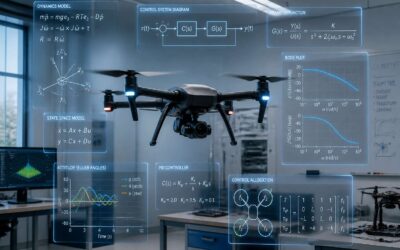
Firmware tuning transforms how an osa quadcopter interprets sensor data. After physical balance is corrected, the flight controller still needs calibrated proportional, integral, and derivative gains. Each value governs how quickly the craft corrects error. A poorly tuned set produces jitter or delayed reactions.
Custom flight modes extend those adjustments into practical situations. Acro mode removes stabilisation for aggressive maneuvering. Cinematic mode restricts angular speed for smooth footage. Mode selection changes the response profile without altering hardware.
- Altitude hold reads barometric pressure to keep height stable.
- Return-to-home recalculates a path when GPS lock is restored.
- Sport mode raises the tilt limit for higher cruising velocity.


0 Comments