Overview and Definitions
The first time I saw a quadcopter hovering over a Johannesburg township, I mistook it for a child’s toy. Then it delivered a medical sample to a clinic in minutes, a trip that would take a car an hour. That moment captured the essence of the quadcopter vs helicopter debate: scale, cost, and intent.
A helicopter is a machine of brute persistence, built to carry people and heavy cargo for hundreds of kilometers. A quadcopter is a nimble observer, a precision tool for short hops and clear views. Both are rotorcraft, but they solve different problems. One demands a pilot with years of training; the other can be flown by a technician with a tablet.
Design and Mechanics
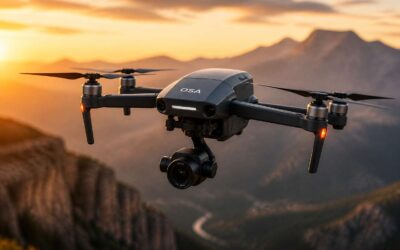
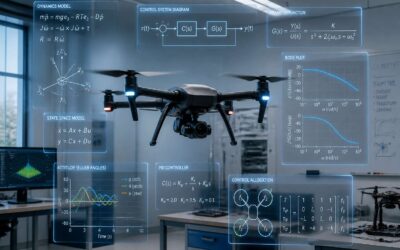
At first glance, the difference is elemental. A quadcopter is a triumph of software, a machine held aloft by four fixed-pitch rotors that adjust their speed thousands of times a second to maintain stability. It relies on a flight controller, a small computer, to make constant, invisible adjustments. This simplicity is its genius. There is no tail rotor, no swashplate, and no complex variable-pitch mechanism. The components are few, and the maintenance is often a matter of swapping out a motor or propeller. The engineering philosophy is one of distributed thrust and electronic balance, a direct descendant of the smartphone era.
The helicopter, however, is a masterclass in mechanical complexity that solves the same problem through brute-force physics and intricate linkages. Its single main rotor and tail rotor are connected through a sophisticated gearbox and a swashplate system that allows the pilot to alter blade pitch collectively and cyclically. This mechanical ballet demands constant, precise calibration. To understand the difference in design, consider the core elements:
- Control: Electronic sensors and software manage the quadcopter’s stability.
- Power: The helicopter uses a complex transmission to drive its variable-pitch rotors.
- Cost: The quadcopter’s simplicity often translates to lower initial investment.
- Complexity: The helicopter’s mechanical linkages offer direct, tactile pilot feedback.
When you look at the quadcopter, you see the future of automation, a platform that is almost a camera accessory. Its design permits it to hover in place with a rigidity that is almost unnatural. The helicopter, by contrast, offers a raw, responsive connection between pilot and machine, a feeling that is difficult to replicate. One represents accessible technology, the other represents engineering heritage. They are both airborne, but they live in different worlds. One is an algorithm in the sky, the other is a mechanical heart beating against gravity. The design choices define the entire experience, from the initial price to the very nature of the flight itself. For many, the whisper of a quadcopter is the sound of progress, while the thump of rotor blades is the sound of raw ambition. The open skies of South Africa welcome both, each according to its own mechanical nature.
Flight Performance and Capabilities
The sky treats these machines differently. A helicopter commands power through its rigid rotor, while a quadcopter pivots on four spinning propellers. In the quadcopter vs helicopter debate, flight performance reveals their souls. The helicopter carries heavy loads across vast distances, its endurance measured in hours. The quadcopter hovers with a precision that feels almost intimate, but its battery life fades fast.
- Agility: quadcopters turn on a dime
- Endurance: helicopters rule the long haul
- Payload: helicopters bear the weight
Wind punishes the quadcopter. Turbulence that would merely rock a helicopter can ground the smaller machine entirely. Yet for survey work or swift inspections, the quadcopter’s instant response wins. The quadcopter vs helicopter choice ultimately asks what you value: grace or grit.
Applications and Use Cases
For a Karoo farmer, the choice between a quadcopter vs helicopter is not a philosophical one. It is a matter of cost per hour. A manned helicopter can burn through a significant budget in a single morning of fence inspection, while a battery-powered drone offers a fraction of the overhead, yet it lacks the endurance for long-distance patrols. This stark economic reality dictates the decision.
In the realm of crop scouting, the aircraft of choice performs a precise function. The helicopter’s rotor wash can damage sensitive canopies, so farmers often turn to smaller, electric rotors. Here, the operational flexibility of a remote pilot shines through:
– Spotting heat stress in livestock from a safe altitude.
– Spot-checking irrigation pivots after a lightning storm.
– Mapping invasive plant species for targeted removal.
However, for wildlife anti-poaching units, the brute force of a helicopter remains the gold standard. The sheer speed to reach a distant ranger post is unrivaled. Yet, the rapid proliferation of drone technology is creating a strange symbiosis, where the larger craft serves as a command centre, with quadcopters deployed as scouts. This layered approach offers the best of both worlds, especially when operating in the crowded airspace above Cape Town.
Cost and Maintenance
When you weigh quadcopter vs helicopter, the cost gap is staggering. A basic helicopter costs millions of rand, while a decent quadcopter is less than a used car. That shapes every decision! In South Africa, I’ve seen farmers choose quadcopters for crop scouting because they can handle the maintenance themselves. A helicopter needs a certified mechanic, and every flight hour eats your budget.
- Quadcopter batteries need replacing every few hundred cycles.
- Helicopter engine overhauls are scheduled and costly.
- Quadcopter motors wear out, but they’re cheap to swap.
The real shock comes with downtime. A grounded quadcopter waits for a parcel, but a grounded helicopter waits for a specialist who might live in another province. Honestly, the maintenance burden of a helicopter is a lifestyle choice. For most of us, the quadcopter vs helicopter comparison settles itself once you see the repair bills.
Safety and Regulations
Flying over Johannesburg without a permit can end in fines. The quadcopter vs helicopter safety gap starts with pilot training. Helicopters demand years of skill. Quadcopters often do not, which is why regulators are scrambling to keep up.
South African law separates them clearly. The SACAA treats helicopters as aircraft. Drones fall under the Civil Aviation Regulations Part 101. I have seen pilots mix up the paperwork, and that confusion kills.
- Helicopter licences require medical checks
- Drone operators need a remote pilot certificate for commercial work
- Both require adherence to airspace restrictions
When you weigh the two, remember that rules exist for a reason. Unmanned flights below 400 feet still share the sky with manned aircraft.

0 Comments