Understanding Quadcopter Fundamentals
How Quadcopters Achieve Stable Flight
Quadcopter tt technology rests on a paradox: four spinning rotors that seem chaotic, yet hover with precision. In South Africa’s coastal winds, stability depends on a flight controller processing sensor data up to 400 times per second.
The stability of this craft comes from differential thrust. Each rotor adjusts speed independently to manage pitch, roll, and yaw. Without these micro-corrections, the machine would tumble. Gyroscopes and accelerometers feed real-time data to the controller, which recalculates motor outputs constantly.
- Two clockwise rotors and two counterclockwise rotors cancel torque.
- Sensor fusion combines inertial measurement unit data for accurate orientation.
This fundamental balance allows the aircraft to hold position even as wind shifts. For any quadcopter tt pilot, understanding this process precedes confident flight.
Essential Components That Make Up a Quadcopter
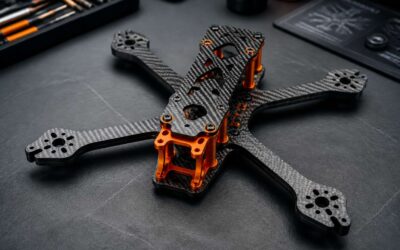
Before a quadcopter tt hovers, the hardware must prove itself. A quadcopter tt consists of five physical components that operate without negotiation. The frame, usually carbon fibre or nylon, handles the stress. The four brushless motors convert electrical energy into torque. Electronic speed controllers, or ESCs, manage each motor individually. Propellers create the thrust, and the lithium polymer battery stores the energy.
These parts work together directly. An undersized battery limits the motor output. A flimsy frame flexes during a turn. A poor ESC delays the motor response. The right combination decides between a stable platform and a failed launch.
The critical list:
- Frame: structural rigidity.
- Motors: rotational force.
- ESCs: current switching.
- Propellers: thrust generation.
- Battery: energy density.
That is the mechanical set. The flight controller, covered earlier, directs the commands, but without these parts, it has nothing to control.
Different Types of Quadcopters and Their Uses
Across South Africa, quadcopter tt platforms serve roles that range from agricultural surveying to cinematic capture. The variety is not cosmetic. Each configuration exists because it solves a specific problem. A racing model prioritises acceleration and agility, often sacrificing flight time for raw response. A camera platform favours stability and payload capacity over speed. Different missions demand different trade-offs!
Consider the common categories:
- Toy-grade quadcopters: limited range, fixed cameras, short battery life.
- Racing quadcopters: high throttle response, lightweight frames, manual flight modes.
- Camera quadcopters: gimbal mounts, obstacle sensors, extended hover times.
- Heavy-lift quadcopters: multi-rotor redundancy, high-capacity batteries, industrial applications.
The differences matter when you choose a quadcopter tt for a specific job. A mining operation in the Northern Cape needs a different machine than a filmmaker in Cape Town. Payload limits, flight endurance, and controller range shift with each category, and I have watched operators waste budgets ignoring that fact.
Common Terminology Every Pilot Should Know
Every pilot learns the hard way that a quadcopter tt is not a toy you unpack and fly. The first time a gust of wind shoves your machine sideways, you discover what “attitude mode” actually means. It is the difference between the aircraft holding its position and drifting off with the breeze. Knowing the vocabulary prevents costly mistakes.
Here is the terminology that matters:
– Pitch: the forward and backward tilt of the nose.
– Roll: the sideways tilt from left to right.
– Yaw: the rotation around the vertical axis.
– Throttle: the power that controls altitude.
These four inputs define every manoeuvre. Beyond the sticks, you must understand “RTF” (ready to fly) versus “BNF” (bind and fly). The first is a complete package. The second demands you own a compatible transmitter already. Also learn “flyaway,” the grim term for a machine that loses its signal and departs without you. This vocabulary is not academic. It saves you money and keeps your quadcopter tt within visual line of sight, which South African regulations require. I have watched hobbyists ignore these basics and pay for the lesson twice.
Choosing the Right Quadcopter for Your Skill Level
Best Options for Beginners
The first taste of flight is often a humbling experience, especially for the uninitiated. A quadcopter tt with too much power will punish a shaky hand. Therefore, the aspiring pilot must seek out a machine that forgives hesitation rather than one that demands precision. Your initial goal is to build instinct, not to conquer the heavens.
Durability and simplicity are the true currencies for a beginner. Look for models with propeller guards and a sturdy landing frame. These features act as your first line of defense against the inevitable, clumsy encounter with the earth. In this regard, the quadcopter tt market offers several forgiving platforms that prioritise stability over aggressive speed.
– Start with a model that has a dedicated “beginner mode” to limit altitude.
– Choose a device with a camera that is removable to reduce weight and repair costs.
– Consider a unit with a long battery life to maximise actual practice time.
Your first machine is not a statement of intent; it is a training ground. The focus should be on mastering the controls until the quadcopter tt becomes an extension of your own reflexes. Only then will you be ready for a more tempestuous machine.
Intermediate Models for Enthusiasts
Once the trembling thumbs of a beginner evolve into steady hands, the demand for precision grows. For the enthusiast, the quadcopter tt becomes less a toy and more a serious tool for controlled flight. Intermediate models strike a deliberate balance between agility and forgiveness.
These machines often include GPS assisted hovering and altitude hold, tools for consistency, not crutches. The aircraft should feel eager, yet respectful of your input.
- Brushless motors deliver smoother acceleration and longer service life.
- A modular frame allows for replaceable arms when repairs become necessary.
- Dual rate transmitters permit toggling between tame and spirited flight.
Flying an intermediate quadcopter tt means embracing calculated risk. The machine will not save you from every error, but it will teach you to anticipate them. That subtle tension is precisely what transforms a pastime into a craft!
Professional and Commercial Grade Drones
Professional grade quadcopter tt units operate under different rules. In South Africa, commercial pilots fly these machines under Part 101 regulations, where a mistake costs a contract, not a propeller. The price of entry is measured in skill, not currency alone.
What separates commercial hardware from hobbyist gear:
- Redundant flight controllers that survive component failure
- Payload systems for thermal imaging or precision agriculture
- Encrypted data links for sensitive survey work
Choosing the right quadcopter tt for your skill level demands honesty. A survey rig is a liability in the hands of a novice. I have watched experienced photographers freeze during their first manual takeoff. The machine responds to inputs, nothing else. The gap between claimed skill and actual skill emerges quickly at this tier. Flight hours expose the difference between wanting to fly and being able to fly.
Budget Considerations and Price Ranges
The average South African pilot will crash within their first ten flight hours. That reality shapes every budget conversation. A quadcopter tt at R2,500 looks tempting, but the parts holding it together mirror the price in durability. In practice, the cheapest builds demand the most frequent repairs. A responsible entry point always includes buffer for extra batteries and a spare set of propellers.
Price ranges shift depending on why you fly. Hobby units with GPS features settle around R6,000 to R12,000. A quadcopter tt with redundant sensors climbs toward R20,000. Commercial rigs cross R50,000 before payloads. These numbers reflect capability, not status.
In South Africa, exchange rates and import duties skew every quote. Budget shopping without checking local spare part availability leads to grounded machines. The right purchase for your skill level leaves financial headroom after the sale.
Key Factors to Compare Before Purchasing
A quadcopter tt does not care about your confidence. It obeys only the inputs you give it, and South African gust fronts expose any gap between skill and expectation. Before you purchase, match the machine’s responsiveness to your actual flying hours, not your desired ones.
Compare key factors with brutal honesty.
- Flight controller tuning: does the default firmware let you adjust gains without a PC?
- Propulsion headroom: can the motors handle a payload without sagging?
- Service network: are local dealers able to repair the aircraft within a week?
These measurable details separate a manageable upgrade from a costly exercise in waiting.
Key Features to Look for in a Modern Quadcopter
Camera Quality and Gimbal Stabilization
Most pilots overlook that lens aperture matters as much as megapixels. A wider f/1.8 aperture lets in more light during golden hour, giving your footage depth and warmth. For the quadcopter tt, the camera unit should offer manual ISO control and a decent dynamic range. I have seen too many expensive drones fail because the sensor crushed shadows.
A robust gimbal with brushless motors absorbs vibration from rotor wash. Consider these features when you inspect stabilization:
– 3-axis mechanical damping for smooth pans
– Yaw control within 0.01 degrees
– Quick release for balancing without tools
The interplay between camera quality and gimbal performance defines your final output. Without proper stabilization, even a 4K sensor produces unusable jitter. In South Africa’s windy conditions, this becomes critical. A quadcopter tt with a high quality gimbal holds its horizon line, so your footage remains calm and watchable.
Flight Time and Battery Technologies
Flight time remains the single most frustrating metric in drone ownership. The quadcopter tt, like most modern units, battles physics every second it stays airborne. Lifting weight demands power, and power drains batteries quickly.
Battery technology has evolved, but lithium polymer cells still dominate the market. These packs offer high discharge rates and decent energy density. You will find capacities ranging from 3,000mAh to over 6,000mAh depending on your model. Higher capacity means heavier payload, creating a tradeoff between endurance and agility.
Modern charging systems have improved the experience:
– Smart chargers balance individual cells to extend pack life
– Regenerative braking recovers energy during rapid descent
– Temperature sensors prevent thermal runaway during fast charging
The quadcopter tt benefits from these advancements. You can expect realistic flight times between 20 and 35 minutes under normal conditions. Aggressive flying, strong wind, or heavy camera payloads cut that number significantly.
Cold weather also affects performance. Lithium polymer cells lose capacity when temperatures drop, so winter flights demand extra caution. Keep spare packs warm before use and monitor voltage telemetry closely.
GPS and Intelligent Flight Modes
Two metres. That is the accuracy a good GPS module delivers on a quadcopter tt. Modern units lock onto multiple satellite constellations, including GLONASS and Galileo. Dual band receivers maintain that precision even near buildings. Your drone stays put instead of drifting into a brick wall!
Intelligent flight modes are the real differentiator. Look for these:
- Return to home triggers automatically when signal drops or battery hits 20%
- Active track keeps a moving subject framed without joystick input
- Waypoint missions let you preprogram a route and then relax
The quadcopter tt executes these modes smoothly. Orbit shot circles a subject while maintaining distance. That gives you a stable vantage point without awkward stick inputs. Just remember to calibrate the compass first.
Obstacle Avoidance and Safety Sensors
Collisions with static objects account for roughly 35% of drone repair claims. That equation explains why obstacle avoidance has shifted from luxury to necessity. A quadcopter tt without these systems relies on pilot reflexes, and reflexes cannot beat gyroscopic inertia.
Modern units bundle several sensing technologies to create a protective envelope. Look for these:
- Forward stereoscopic cameras that measure distance through parallax
- Infrared time-of-flight sensors that gauge proximity in dim light
- Ultrasonic downward sensors that prevent landing mishaps
Safety sensors go beyond collision prediction. They monitor motor temperature, battery discharge rates, and IMU health. When a quadcopter tt detects an odd vibration, it can initiate a controlled hover instead of a turtle spin. That is self preservation, not science fiction.
Controller Range and Transmission Systems
Pilots often obsess over camera specs before realising that a weak transmission link turns any quadcopter tt into a drifting hazard. I have watched operators lose connection at three hundred metres because they trusted a smartphone tether over a dedicated RF protocol.
Controller range depends on more than antenna gain. Frequency band, output power, and encoding scheme all set the boundary. A quadcopter tt using 2.4 GHz with frequency hopping can hold a tighter connection than a unit on congested 5 GHz Wi-Fi.
Consider these factors:
- The control link’s operating frequency and whether it auto-switches
- Transmitter latency, measured in milliseconds
- Redundant control protocols such as Crossfire or OcuSync that keep the connection alive
Transmission systems determine your confidence during manual flight. A lag between stick input and throttle response leaves the aircraft feeling delayed and unresponsive. Modern digital links shrink that delay below twenty milliseconds, which changes how aggressively you can fly.
Portability and Folding Designs
A quadcopter tt only earns its place in the backseat if it breaks down small enough to shove under a seat. The folding arms matter less than the hinge quality and latch tension. I have watched cheap plastic joints wear out within weeks, turning a portable drone into a floppy liability. Look for metal on metal contact points and a positive click when the arms lock into place.
Weight matters, but balance matters more. A 250 gram quadcopter tt with batteries centered over the main plate feels lighter than a 200 gram one with awkward overhang. Check the folded dimensions against your daypack or camera bag. The best designs tuck the gimbal and rotors inside the frame without extra bulk.
– Inspect the folding mechanism for play when the aircraft is armed.
– Confirm the battery bay snaps shut without prying.
– Measure the folded width against your existing camera gear.
These details decide whether you actually fly or leave it behind.
Mastering Flight Operations and Maintenance
Pre-Flight Checks for Safety
Mastering flight operations is less about theatrics and more about repetitive discipline. Your quadcopter tt will forgive a clumsy thumb, but it will not forgive a loose propeller. Pre-flight checks are the difference between a productive session and a costly retrieval mission.
Consider the ritual before every launch:
– Inspect propellers for chips or cracks
– Verify battery voltage and cell balance
– Confirm GPS lock and magnetometer calibration
– Check motor mounts for debris
– Test gimbal movement and controller response
A quadcopter tt demands respect for its mechanical whims. In South Africa, wind conditions and dust can turn a routine flight into an exercise in damage control. Keep your pre-flight routine short but thorough. Treat each check as a conversation with the machine. That dialogue is what separates a pilot from a spectator.
Basic Flight Maneuvers and Controls
Mastering flight operations begins with understanding that throttle, yaw, pitch, and roll work as a single system. South African winds shift without warning. Fly with the wind on your outbound leg, then return against it. This practice prevents battery drain and gives you authority over descent.
Basic maneuvers start with the hover. Hold your quadcopter tt steady at eye level for ten seconds. Then practice coordinated turns, where yaw and roll move together. Do not chase the drone. Let your thumbs lead with small corrections.
Maintenance follows the same rhythm:
– Clean the motors after dusty flights
– Check the propeller nuts for torque
– Inspect the landing gear for stress marks
The machine requires consistent care.
Routine Maintenance and Cleaning
The true operational cost of a quadcopter tt is measured in crashes, not rands. A pilot who masters flight dynamics still loses machines to poor maintenance. The sequence matters. Dust cakes onto the motor bells within minutes over the Karoo. Heat builds. Bearings grind. The craft fails at the worst possible moment, usually fifty meters up.
Routine maintenance anchors every other skill. The process is straightforward if you keep it deliberate.
– Blow out the motors with compressed air after every flight session
– Wipe the gimbal dampers with a microfiber cloth
– Torque the propeller nuts with a driver, never by feel
– Examine the battery leads for fraying at the solder joints
Cleaning is not cosmetic. South African fine dust acts as an abrasive. It settles into the rails and accelerates wear on moving components. A clean quadcopter tt runs cooler and holds its settings longer. The time spent on the bench translates directly to confidence in the air.
Troubleshooting Common Flight Issues
Mastering a quadcopter tt means reading its behavior before the failure becomes visible. A sudden yaw drift often points to a misaligned gyro, not a motor issue. Vibration in the video feed usually traces back to unbalanced props or a bent shaft.
When troubleshooting common flight issues, work through the simplest causes first. I have seen pilots replace entire flight controllers only to find a loose connector. That is the expensive way to learn.
- Check the prop guards for cracks
- Inspect the motor mounts for play
- Verify the receiver antenna position
The ground station logs reveal the truth. A rising current draw with dropping voltage indicates a battery near its limit. Do not ignore it.
Upgrading Propellers, Batteries, and Motors
Upgrading a quadcopter tt changes its personality more than any software tweak. Propeller pitch, battery cell count, and motor KV ratings form a triangle of performance. Change one and the others must follow, or you invite instability.
A high-discharge battery with stock motors may deliver punchier climbs, but the added current can overheat a stock ESC. Larger props increase thrust while draining packs faster. Pilots who master flight operations track these trade-offs obsessively.
Consider the upgrade path:
– Match the propeller load to the motor’s torque curve
– Confirm the battery’s C-rating exceeds the system’s draw
– Recalibrate the ESCs after any hardware change
A quadcopter tt rewards methodical upgrades. Skip the math and you trade one problem for another.
Navigating Legal Rules and Safety Regulations
Registration and Licensing Requirements
Every quadcopter that lifts off in South Africa answers to the Civil Aviation Authority. The Civil Aviation Regulations Part 101 govern all remotely piloted aircraft, and the quadcopter tt must comply like any other model. Registration is the first gate. Any aircraft heavier than 250 grams requires a certificate of registration from the SACAA. You also need a marker with your name and contact details on the frame.
Pilots must hold a Remote Pilot’s Licence (RPL) for most flights. The training covers air law, meteorology, and navigation. An operator without a licence faces penalties that extend beyond fines. The SACAA can impound the equipment and open criminal proceedings.
Commercial work deepens the requirements. You need a Remotely Piloted Aircraft Operator Certificate (ROC), which demands an operations manual, maintenance schedule, and procedural documentation. The necessary paperwork includes:
- Identity document or passport
- Proof of registration
- RPL certificate
- Operator certificate for commercial operations
Weather and privacy laws add further constraints. You cannot fly within 50 metres of people or property without permission. The quadcopter tt is a capable machine, but the law treats it with the same seriousness as a manned aircraft. Ignorance of these rules does not soften enforcement.
Understanding No-Fly Zones and Airspace Restrictions
South African airspace holds boundaries that shift constantly. A quadcopter tt launched near an aerodrome, military installation, or prison crosses into controlled territory the moment it leaves the ground. The consequences include fines, seizure, and criminal records. The CAA publishes restricted and danger areas, but those zones change with daily NOTAMs.
Temporary restrictions appear for VIP movements, firefighting operations, and public gatherings. I have watched operators grounded for missing a single NOTAM. The responsibility to verify current airspace status rests with the pilot before every flight. The restricted map includes:
- Aerodromes, including private strips and helipads
- National key points such as power stations and water infrastructure
- Restricted airspace around prisons, courts, and state buildings
Privacy Concerns and Local Guidelines
The fine for a first offence can exceed R50,000, and that figure often makes pilots pay attention. The legal framework around a quadcopter tt demands more than a simple registration. It requires a working knowledge of the Civil Aviation Regulations, specifically Part 101, which governs the operation of Remotely Piloted Aircraft. This legislation mandates a valid Remote Pilot Licence for commercial work, while recreational use still demands compliance with operational limits like altitude caps and visual line of sight. Ignorance of these statutes offers no protection, as the CAA enforces them with increasing rigor.
Privacy law adds another layer of complexity. The Protection of Personal Information Act (POPIA) applies directly to aerial imaging. A camera fitted to a quadcopter tt can capture faces, vehicles, and property without consent, which creates a legal liability. Even casual hobby flights over a neighbour’s garden can contravene POPIA, especially if the footage is stored or shared. The operator bears the full responsibility for data collection, and this responsibility remains even if the flight is lawful in all other respects.
Local guidelines vary across municipalities. A flight that is legal in a rural area of the Free State may be prohibited in a Johannesburg suburb. Certain townships have specific bylaws restricting drone activity near schools, clinics, and taxi ranks. Before launch, the pilot must check municipal ordinances alongside the CAA airspace map. The operational requirements involve:
– Verifying municipal bylaws for the specific district
– Obtaining written permission from private landowners
– Confirming the flight area is clear of SAPS operations
– Checking for local wildlife or farming sensitivities
These steps feel tedious until a courtroom appearance makes them seem trivial. A quadcopter tt in the wrong place creates a chain of consequences. The pilot, not the machine, answers for every infraction.
Safe Flying Practices for Residential Areas
Residential airspace presents a peculiar challenge. The quadcopter tt that performs flawlessly over open veld becomes a different machine among rooftops and power lines. Wind patterns shift unpredictably between buildings, and Wi-Fi signals from countless homes can interfere with control links.
I have learned to treat every residential launch as a fresh operation, never assuming familiarity. The legal rules demand it. Under the Civil Aviation Regulations, flying within 50 metres of any person or property not under your control requires heightened caution.
- Keep the aircraft below the roofline when passing near occupied homes
- Maintain a hover above your own launch point before expanding range
- Land immediately if children or animals appear in the flight path
The safety regulations exist for real reasons. A quadcopter tt loses orientation quickly against a backdrop of similar rooftops, and reaction time shrinks in confined spaces. Each flight carries its own conditions, so I read the environment before spooling up the rotors.
Weather Conditions and Environmental Risks
The South African Civil Aviation Authority draws hard lines around where a quadcopter tt may operate. Beyond the obvious no-fly zones near airports and prisons, weather conditions carry their own legal weight. Flying in fog or low visibility is not merely a safety risk. It breaches the requirement to maintain visual line of sight with the aircraft at all times.
Highveld thunderstorms build quickly, often by early afternoon. A quadcopter tt pushed into a cold front faces wind shear that no stabilisation system can fully counter. Heat also thins the air, reducing rotor efficiency and battery endurance.
Environmental risks to monitor before launching:
– Dust and sand loading, especially in the Karoo
– Coastal salt spray accelerating corrosion on exposed circuit boards
– Temperature deltas between direct sun and shade affecting gyroscope calibration
The regulations assume you have checked these conditions. The law does not excuse ignorance of the sky.
Insurance options for drone owners
The legal side of flying a quadcopter tt rarely receives the attention it deserves until something goes wrong. South African operators must register with the SACAA, keep the correct documentation, and accept that insurance is not an optional extra. Policies for a quadcopter tt vary sharply based on intended use. Hobby coverage may top out at a few thousand rand, while commercial operators require liability limits that match serious professional work.
Consider these insurance options:
– Public liability for third party property or bodily injury
– Hull insurance covering repair or full replacement
– Personal accident cover for the pilot
Rates depend on flight history, the aircraft weight, and the operating region. A quadcopter tt flown on weekends in Gauteng carries different premiums than one flown near the coast, where salt air attacks exposed electronics. Read the wording carefully because exclusions hide in plain sight.
Advanced Techniques to Elevate Your Aerial Experience
Capturing Stunning Aerial Photography and Video
A single frame from a quadcopter tt can change how you see the landscape. I have watched pilots capture the Drakensberg at golden hour and walk away with images that look impossible. The secret lies in technique, not hardware. Fly slow and let the gimbal lead the shot. Manual exposure keeps the sky from burning out and preserves detail in the shadows.
The difference between amateur footage and cinematic sequences often comes down to how well you anticipate the drone’s inertia. Practice smooth stick inputs until they become muscle memory. Then add controlled movements that give the viewer a reason to keep watching:
- Orbit subjects at a steady radius while keeping the camera locked on the focal point.
- Use the 180 degree rule for panning to avoid that robotic, jerky feel.
- Shoot in raw or flat profiles to recover more detail during grading.
Anticipation matters more than reaction. The best aerial shots feel deliberate, as if the quadcopter tt already knew where the light would fall before you even lifted off.
Exploring First-Person View FPV Flying
Somewhere above the Cederberg, a pilot threads a quadcopter tt between sandstone arches at 80 kilometers per hour. The FPV feed is a live wire. Your stomach drops with every bank, and the goggles erase the world behind you. This is first person view flying, and it changes what you expect from a drone.
FPV demands a different muscle memory. Where cinematic flying favors slow, deliberate curves, FPV rewards anticipation and authority. You read the terrain before it appears on the video feed. A quadcopter tt meant for FPV carries different power-to-weight expectations. The camera angle tilts your perception, so distance reads differently, and your brain recalibrates with every flight. Rotor noise disappears once you commit to a line.
Using Waypoint and Autonomous Flight Missions
Waypoint missions remove the tremor of manual stick control. The quadcopter tt locks onto a series of plotted coordinates and flies them with geometric precision, which matters when you need data from the same altitude and angle every month. A farm near Stellenbosch used this technique to track vine stress across four irrigation blocks.
Autonomous flight planning happens on a screen before you ever launch. Select a location on the satellite map, assign a speed and altitude, then mark each turn.
- Terrain following waypoints keep the lens clear of ridgelines
- Orbital missions circle a structure while the camera aims inward
- Grid patterns cover a field in parallel passes for survey stitching
Each mission file reloads later, so the same quadcopter tt can rerun a survey after a storm or a season passes. This gives you a record of change that a free flight cannot match.
Extending Range and Improving Signal Strength
Flying beyond visual line of sight tests the true range of the quadcopter tt. The signal between controller and aircraft determines mission success. Extending that signal requires attention to antenna orientation and frequency selection. A clear line of sight between controller and aircraft matters more than raw power output.
In South Africa’s open landscapes, interference often comes from obstacles rather than distance. Trees, hills, and structures absorb signal strength. Adjusting the antenna angle to match the aircraft’s position improves reliability. Signal boosters and raising the controller height also help, but they do not replace good antenna habits.
Here are three techniques to consider:
- Maintain line of sight between antenna and receiver.
- Select a frequency band with less congestion.
- Use a parabolic reflector to focus the signal.
Battery voltage drops affect transmission power. Monitor telemetry on the quadcopter tt and return before the signal weakens.
Community Events, Competitions, and Building Skills
South Africa’s drone community has a curious habit of turning open fields into impromptu battlegrounds. The quadcopter tt pilots who dominate local competitions rarely got there by flying alone in the Karoo. They trained with clubs, attended meetups, and absorbed lessons from people who have crashed more times than they admit. Racing leagues and freestyle gatherings force pilots to refine throttle control and split-second decision making.
A competitive circuit changes how you perceive your quadcopter tt. You learn to read wind patterns, anticipate other pilots, and trust your reflexes.
– Practice with a simulator before entering your first race.
– Volunteer at events to learn from judges and organisers.
– Fly in varied South African conditions, from coastal gusts to Highveld thunderstorms.
Community feedback accelerates skill development faster than solo trial and error. The pilots who progress quickest treat every crash as information and every competitor as a temporary mentor.


0 Comments