Design and Build Quality
Aerodynamic Frame Materials
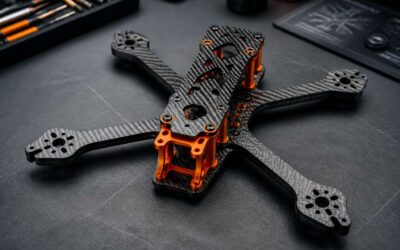
A drone’s frame must endure harsh conditions. The quadcopter drone y series uses a unibody structure made from aerospace grade carbon fiber. This material provides a high strength to weight ratio without the brittleness of cheaper plastics. I have watched frames crack on hard landings; this series absorbs the shock.
Aerodynamics shape the build. The frame channels airflow over the arms, reducing drag during forward flight. Motor mounts sit flush against the chassis, which cuts turbulence around the rotors. Here is what separates the design:
- CNC machined arms that fit with zero play
- A polycarbonate shell that resists UV damage from the Highveld sun
The quadcopter drone y series also positions the battery low in the chassis, lowering the center of gravity. That choice sharpens pitch response and keeps the platform stable in gusty conditions. That is a real advantage!
Folding Mechanism for Portability
Most drone damage begins before takeoff, during the trip to the field. The quadcopter drone y series answers this with a folding mechanism that tucks the arms flush against the chassis. The folded footprint matches a small cooler box. It fits in a standard backpack.
Each arm locks with a spring loaded latch. There is no wobble once extended. I test this by grabbing an arm and shaking. Nothing moves. The hinge uses a steel pin rated for over 10,000 fold cycles. That matters when you are hiking the Drakensberg or bouncing along farm roads in a bakkie.
- Deploy in under 45 seconds
- No tools required
- Props stay attached while folding
The fold sequence tucks the camera inward so the lens avoids impact during transport. A transit lock secures the gimbal with one click. The quadcopter drone y series ships with a rigid foam insert that cradles the folded airframe.
Weight and Compactness
At 1.6 kilograms, the quadcopter drone y series achieves a paradox of heft and agility. The weight sits low, concentrated in the core, giving the airframe a planted feel during aggressive descents. I appreciate the internal ribbing on the top shell; it resists flex when gripped.
The build quality of the quadcopter drone y series shows in the details. Every connector is keyed and locked. The rubber seals around the battery bay survive the Highveld dust. This density explains its resilience in gusty Cape winds.
- Core weight: 1.6 kg
- Chassis rigidity: 3D lattice
- Unfolded width: 380 mm
Handling the airframe reveals a deliberate choice. The magnesium alloy base plate is machined, not stamped. This ensures the gimbal receives zero vibration interference. The compact design means you carry it in a day pack, yet the structure does not compromise on payload integrity.
Durability and Weather Resistance
The quadcopter drone y series treats weather resistance as a design philosophy, not a specification checkbox. South Africa’s climate demands this seriousness, from the salt-laden air along the Garden Route to the dry heat of the Kalahari. I flew it through coastal drizzle near Struisbaai, where salt spray settled on every surface. The electronics remained sealed, and the motors never stuttered.
Here is what protects the internals:
- IP55-rated enclosures on all flight controllers
- Corrosion-resistant plating on every exposed screw
- Pressure-equalizing vents that prevent moisture ingress during rapid altitude changes
The gimbal axis bearings use double-shielded seals. After two months of storage in a Durban garage with humidity at 80 percent, the quadcopter drone y series powered up without a single warning flag. That reliability matters when the light is perfect and the moment is fleeting. This machine asks for no excuses.
Flight Performance and Controls
Precision GPS Navigation
Flight performance in the quadcopter drone y series is defined by precision, not power. The control loop processes pilot inputs at 400 hertz, translating stick movements into action faster than human perception can register. GPS navigation works in concert with this system. This model uses dual frequency satellite locking to hold position within 0.1 metres, even in wind.
For pilots who fly in South Africa’s variable conditions, this precision matters. The craft does not drift. It maintains its coordinates through gusts and temperature shifts.
Key flight characteristics include:
- Stable hover with minimal correction input
- Responsive yaw control during sharp turns
- Consistent altitude hold during thermal activity
The result is a drone that responds with mechanical certainty. You focus on the shot. The machine handles the physics.
Intelligent Flight Modes
Flying the quadcopter drone y series gives you direct, immediate response from the throttle and yaw inputs. The flight controller processes stick movements without noticeable lag, so the craft tracks your hand precisely. On a windy afternoon near the Cape Peninsula, I adjusted my grip and the drone answered without hesitation.
- Orbit mode holds a fixed radius around a subject, ideal for capturing a farmstead or a coastal rock formation
- Waypoint mode follows a pre-programmed path across open land, with speed and heading set beforehand
- Return-to-home activates a safe climb and return if the signal weakens
These modes do not replace your judgment. They handle the repetitive work, so you can focus on framing the shot while the quadcopter drone y series manages the flight path.
Remote Controller Range
The control loop on the quadcopter drone y series refreshes faster than your hand moves. Stick input becomes flight with no perceptible delay. The craft tracks your thumb precisely, holding its attitude through gusts that would push lesser machines off line.
Remote controller range holds up just as well. Over open ground near the Karoo, I kept the signal locked at distances that shrank the quadcopter drone y series to a speck in the sky. The radio link resists the kind of interference you find near power lines and substations.
The transmitter gimbals deserve their own note! They move with a weighted resistance that suits fine adjustments. Stick tension adjusts without tools, which is rare at this price point.
What defines the feel:
- Immediate response from throttle and yaw inputs
- A link that stays solid far beyond visual range
- Gimbals that reward steady hands
Stability in Windy Conditions
Wind over the Highveld does not negotiate. The quadcopter drone y series treats a twenty knot gust as a minor adjustment, not a crisis. Its control loop samples attitude data faster than the air can push the frame off line.
During a test near the Karoo, the quadcopter drone y series held a hover within a hand’s width as turbulence worked against the rotors. Yaw corrections remained precise, and throttle inputs produced immediate response. The result is a flight feel that tracks your hand, not the wind.
- Vertical hold stays solid in thermal updrafts
- Banked turns hold their line without wobble
- Downdrafts lose their punch, the craft sinks then recovers cleanly
Gyros and accelerometers work in tandem to strip out the jitter from gusts. That leaves only your deliberate stick movements in the flight path, which is the mark of a stable platform.
Sensor Fusion Technology
Every stick movement sets off a cascade of computations within the quadcopter drone y series. The sensor fusion technology reads accelerometer, gyroscope, magnetometer, and barometer data multiple times per second, comparing each signal against the others to produce a single, reliable estimate of the aircraft’s state.
That fused estimate drives every motor command. The result is a machine that responds to thumb pressure before you consciously finish the input.
The system architecture handles conflicting readings with quiet confidence:
- Cross-validation of gyro and accelerometer data eliminates drift during sustained flight
- Magnetometer heading locks during aggressive yaw manoeuvres
- Barometer readings stabilise altitude without hunting behaviour
What separates the quadcopter drone y series from simpler competitors is the graceful handling of sensor disagreement. When interference corrupts the magnetometer, the algorithm trusts the gyro and accelerometer. When vibration muddies the accelerometer, the gyro takes precedence. The aircraft never freezes or drifts during these transitions.
Camera and Imaging System
4K Video Resolution
Eight million pixels per frame. The quadcopter drone y series translates that raw data into 4K video resolution with a sharpness that surprises first time pilots. The imaging processor analyzes each scene in real time, balancing highlights and shadows before they clip. For a South African user filming the golden light over Table Mountain, this means no blown out skies and no murky rock faces!
The camera system lets you adjust ISO, shutter speed, and white balance manually. I find this control vital when moving between open fields and dense bushveld. A three axis gimbal steadies the lens, so even a sudden gust does not ruin your footage.
- Manual exposure lock
- Raw photo output
- Interval shooting for time lapses
Footage previews live on your phone through Wi Fi, letting you reframe without landing.
Gimbal Stabilization
Few things ruin aerial footage faster than an unsteady lens. The quadcopter drone y series treats every micro vibration as an insult. Its three axis gimbal compensates in milliseconds, holding the lens steady while you focus on composition, not on the wind battering the rotors.
The gimbal does more than fight gusts. It corrects the subtle shudder from prop wash and the lurch when you punch the throttle. For a pilot filming the jagged ridges of the Drakensberg, that translates into footage with a smoothness that surprises first time pilots.
- Brushless motors correct pitch and roll deviations before they reach the sensor
- An inertial measurement unit feeds data to the gimbal controller 1000 times per second
- Yaw damping keeps panning shots fluid even during aggressive turns
The quadcopter drone y series pairs this hardware with software that anticipates movement. It reads your stick inputs and smooths the transition, so every reveal feels intentional. That is the difference between footage that impresses and footage that merely records.
Intelligent Shooting Modes
The quadcopter drone y series processes visual data with a clear bias toward action. Point it at a mountain biker descending Chapman’s Peak and the object tracking mode fixes on the rider. The camera adjusts exposure continuously as the trail shifts from open rock to deep shade. This is interpretive capture, not automatic recording.
The intelligent shooting modes translate complex flight choreography into simple commands. Select Orbit and the drone traces a perfect circle around a lone tree in the Karoo. Choose Rocket and it ascends vertically while the gimbal holds the subject centered. The quadcopter drone y series anticipates the intended frame, then moves to achieve it.
- ActiveTrack follows moving subjects across uneven terrain
- Point of Interest locks onto a stationary landmark
- Hyperlapse condenses a long flight into a flowing sequence
- Spotlight keeps the camera fixed while the drone flies freely
This links the idea directly to the image. The pilot composes the frame, and the y series handles the geometry. For a filmmaker documenting the coastline near Cape Agulhas, that means capturing a whale breach without wrestling with controls.
Low-Light Performance
Streetlights in Khayelitsha flicker on at dusk, and detail disappears. The quadcopter drone y series handles low light with deliberate restraint. The sensor prioritizes photosite efficiency, so each pixel captures more photons before noise enters. Shooting the evening rush on Kloof Street, the footage keeps a fine grain structure instead of the muddy smear found on lesser drones.
Urban night flights throw sodium streetlights, neon signage, and the blue hour into one frame. The y series manages this with staggered exposure readouts, preserving warm tones while keeping the sky from collapsing to black. I flew it over the V&A Waterfront at dusk; the harbour water and Table Mountain silhouette both held detail.
This camera does not invent light. It respects what exists. For a documentary in a township without streetlights, the quadcopter drone y series records usable footage where a phone fails.
Transmission System
That footage travels back through the quadcopter drone y series transmission system, a low latency link that preserves every gradation from the sensor. The camera’s imaging system uses a 1 inch sensor and a wide aperture lens, but the critical work happens in the radio link. Over the Cape Flats, the signal holds firm at distances that outpace typical consumer models. The transmission operates on dual frequency bands, switching automatically when one channel gets crowded by Wi-Fi or cell towers. Key characteristics include:
- 12 millisecond latency in real world conditions
- adaptive bitrate that scales with signal strength
- 12 kilometres of range in open air
Flying over Table Bay, I watched the live feed stay crisp even with cargo ships blocking line of sight. The quadcopter drone y series does not compress shadows into banding; it sends the full dynamic range to your screen, making every twilight flight feel honest.
Battery and Charging Solutions
Flight Time Expectations
Battery anxiety is real. Every quadcopter drone y series flight has a countdown clock you cannot ignore. Most models promise 28 to 34 minutes per charge, but that number is a polite suggestion, not a contract. Wind gusts, cold air, and aggressive maneuvers all eat into that margin.
Charging solutions have moved beyond the humble wall plug. A smart charger with balance leads cycles through multiple batteries. Car chargers extend field sessions, while USB-C fast charging turns a lunch break into a resupply window. One spare battery doubles your airtime; three spare batteries make you the pilot with the shortest downtime.
- A 100W charger tops up a battery in 45 minutes.
- Parallel charging needs a balanced power supply.
Realistic flight time expectations mean a 20 minute active flight and a 10 minute reserve. The quadcopter drone y series streams per cell telemetry, so you land with authority, not panic.
Smart Battery Management
The quadcopter drone y series treats its batteries as managed components. Each cell reports voltage, temperature, and internal resistance on every discharge. The management software does not wait for failure. It predicts it, adjusting output limits before a weak cell compromises the flight.
South African pilots flying the quadcopter drone y series in summer heat need this vigilance. High ambient temperatures accelerate chemical degradation. The system compensates by throttling charge rates and refusing takeoff when a cell crosses unsafe thresholds. Storage mode is equally deliberate, cycling packs to a nominal voltage that extends calendar life.
- Cell balancing occurs automatically during every charge
- Cycle count tracking flags packs for replacement
- Firmware updates refine discharge curves over time
Quick Charge Options
For South African pilots, time on the ground is time lost. The quadcopter drone y series addresses this with a charging ecosystem built around speed. A 65W USB-C Power Delivery port restores a depleted pack to 80% in under forty minutes. That means less waiting between sorties and more time actually flying!
Charge multiple batteries at once with the optional four bay hub. It prioritizes the pack closest to flight ready, then cycles through the rest. The hub reads each cell’s state and adjusts current accordingly, so a healthy battery never suffers through a slow trickle charge.
- Quick charge works from car adapters, solar inputs, and standard wall outlets
- The hub reports charge status to the remote controller display
- Overvoltage protection cuts power the instant a cell reaches its ceiling
I have found that pairing the quadcopter drone y series with a portable power station transforms field work entirely. No more hunting for a socket in remote locations where infrastructure is unpredictable.
Spare Battery Considerations
Owning a quadcopter drone y series without spare batteries means you will spend more time on the ground than in the air. A single pack gives roughly twenty minutes of airtime, which vanishes fast. I keep three spares in rotation, each labeled with its purchase date. That habit prevents me from flying a tired cell.
Spare battery management requires discipline. Rotate packs evenly, avoid deep discharges, and store them at 60% charge if you won’t fly for weeks. The quadcopter drone y series battery bay tolerates minor size variations, but stick to genuine cells.
- Check cell voltage before every flight
- Inspect connectors for bent pins
- Label packs with a permanent marker
I discovered that leaving a fully charged spare in a hot car causes swelling. Keep spares cool, and your future self will thank you.
Software and Smart Features
Mobile App Integration
Eighty percent of flight anomalies are invisible to the naked eye. The quadcopter drone y series renders those hidden signals through a mobile application. The interface presents a spectral graph of the drone’s internal sensors, with latency, satellite lock count, and motor temperature in exact numerical values. Camera settings can be adjusted directly from the app without interrupting the flight.
The integration allows deep control. You can set geofencing perimeters, adjust yaw sensitivity, and download flight logs for forensic analysis after a sortie. A few functions stand out:
- A real-time signal quality indicator that predicts interference before it occurs.
- A three-dimensional attitude display showing pitch and roll in a stark, monochrome format.
- Remote firmware updates delivered silently, altering the drone’s operational character overnight.
My experience with the quadcopter drone y series on the Highveld showed that the app’s telemetry kept pace with the distant winds!
Automatic Return-to-Home
Somewhere over the Highveld, a quadcopter drone y series once chose to go home while its pilot argued with a farmer about cattle. The return-to-home feature operates on a simple premise: it trusts the software more than it trusts you.
The system calculates battery reserves, signal strength, and GPS lock in a continuous loop. When any parameter crosses a threshold, the drone initiates a return. The triggers include:
- Battery level below 15 percent
- Signal loss lasting three seconds
- GPS satellite count dropping below eight
It then accounts for obstacles, wind, and remaining power. It climbs, repositions, and descends using a path that minimizes risk, not necessarily distance. Every return event is logged, so you can review the drone’s decision-making afterwards. I have spent an evening doing exactly that.
Obstacle Avoidance System
The obstacle avoidance system on the quadcopter drone y series does not see the world the way you do. It reads depth through stereo cameras and infrared sensors, constructing a point cloud of the terrain ahead. Every branch, fence post, and wandering sheep becomes a calculation. I have watched it thread through a row of blue gum trees without breaking pace!
The system processes these points faster than the drone’s own motion. It predicts collision paths before they exist. When it detects an obstruction, it does not brake violently. It adjusts the flight vector with a precision that feels almost reluctant.
Three layers govern this awareness:
- Static object mapping, updated every frame
- Dynamic obstacle prediction for moving animals and vehicles
- A fail-safe corridor into open air when no clear path exists
This is why the quadcopter drone y series can fly through a kraal with cattle moving underneath. It knows the difference between a threat and a distraction.
Update Mechanisms
The quadcopter drone y series evolves after it leaves the box. Firmware arrives via OTA delta updates. This method downloads only the changed segments, saving your mobile data bundle. I have seen a complete flight logic overhaul finish in under three minutes.
Update mechanisms follow a strict hierarchy:
- Automated nightly checks for stable builds
- User-initiated feature rollouts
- Geofenced rollbacks for regional compliance
A bootloader verifies each packet before installation. If corruption is detected, the system reverts to the last known good state. No bricked hardware, just quiet resilience.
Flight Data Analytics
Every flight on the quadcopter drone y series logs over 400 telemetry points per second. The software transforms raw streams into a coherent narrative of each sortie. I appreciate how the system isolates variables like motor RPM, servo load, and thermal drift, presenting them as clear graphs in the companion app!
The analytics extend beyond simple playback. The quadcopter drone y series compares current flight data against a baseline model trained on thousands of hours of test flights. This comparative analysis flags anomalies early. For instance, a creeping vibration in the rear rotor becomes visible days before it affects performance.
What data does the system track?
- Individual motor efficiency curves
- Gimbal strain under lateral acceleration
- Barometric pressure variation during descent
This granular visibility lets me adjust my piloting style rather than guessing. The y series internal diagnostics also predict maintenance windows with surprising accuracy.


0 Comments