Fundamentals of Ultralight Quadcopter Design
What Makes an Ultralight Quadcopter?
Light is the compass that guides every bold flight; the quadcopter ultralight whispers through the air, turning a pocket of wind into a canvas. In design, every gram matters, and balance becomes art. I’ve watched these nimble machines shrug off gravity with quiet confidence, stitching flight paths across the Karoo sky and beyond.
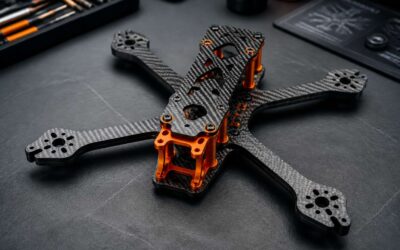
- Featherweight frames built from carbon composites and tough polymers keep mass low without sacrificing strength.
- Efficient brushless motors paired with optimized propellers maximize lift and minimise current draw.
- Smart power systems, lightweight batteries, and clean wiring reduce bloat and improve handling.
Fundamentals like center of gravity, aerodynamics, and modular components define a true ultralight experience that feels almost woven into the wind.
Key Weight and Power Metrics
In South Africa’s sun-burnished skies, the smallest gram holds court—the quadcopter ultralight that slips through air with almost whispered authority! Hover time, response, and trust hinge on a delicate, nerve-like balance of mass and power.
Key weight and power metrics shape its poise:
- Mass distribution and the balance point
- Battery energy density and discharge curve
- Motor efficiency paired with propeller geometry
Those metrics turn theory into practice, letting air meet frame with intention rather than brute force. A true craft negotiates lift and drag in a quiet dialogue, frame and sky in sync.
Every gram spared becomes endurance and every watt saved, a note in the song of flight.
Materials and Build Concepts
Across South Africa’s wind-sculpted hills, the birth of a truly light quadcopter is a quiet art. A quadcopter ultralight must marry strength with grace, turning frame choices into a deliberate whisper rather than a shout. Rimless torsion, precise centring, and skins that shed drag—these decisions shape the craft long before motors bite air.
Materials and build concepts demand a disciplined hand.
- Carbon fiber composites
- Advanced polymers
- Foam-filled spars
- Micro-fasteners and joints
- Lightweight wires and connectors
Joints, tolerances, and manufacturing nuance—these are the hidden notes that let dawn light on the airframe. The builder’s eye travels from raw sheets to a seamless silhouette, weight becoming endurance and rigidity becoming choreography. The air seems to bow to a quiet promise!
Flight Control Basics
In the wind-sculpted skies of South Africa, control is the quiet engine of flight, and the quadcopter ultralight proves the point with every hover. A veteran engineer once quipped: stability beats brute lift, every time.
Flight control basics hinge on a smart brain—the flight controller—that fuses data from sensors, keeps stick inputs predictable, and translates them into smooth motor commands. Think of it as gravity’s best accountant, balancing tilt and yaw in real time.
- Inertial measurement units for attitude and rate sensing
- Sensor fusion and state estimation for stable attitude
- Motor mixing and drive logic to keep inputs linear
- Communication links and safety interlocks
Altitude, drag, and vibration are the unglamorous trio that determine how the craft actually behaves in the air. Lightness is a dance with calibration, mounting, and thoughtful layout, not a magic trick.
Design and Engineering for Ultralight Multirotors
Frame and Propulsion for Lightness
Weight and wonder fuse in the design of the quadcopter ultralight. For the quadcopter ultralight ethos, every gram saved becomes a promise of longer flights. A frame built from carbon fiber and aerospace-grade aluminum yields a skeleton that is incredibly stiff yet oh-so-light, with a geometry that concentrates mass where it avoids drag. Short arms, balanced CG, and smart vibration damping convert raw potential into graceful, steady flight — a whisper of metal and air.
Propulsion for lightness follows a similar creed. Small brushless motors, compact propellers, and a clean power path push efficiency to the fore. Wiring is tucked tight, heat kept at bay, and vibrations tamed. Here are design considerations that keep the craft nimble:
- Monocoque carbon fiber with measured stiffness to minimize weight without sacrificing rigidity
- Low-profile propellers and precise timing to squeeze every watt
- Integrated electronics routing to reduce vibrations and simplify maintenance
Battery Technology and Power Management
Power is the quiet backbone of a quadcopter ultralight. Here in South Africa, inland winds and heat make watts matter more; consider that a 10% improvement in power efficiency can unlock precious minutes of flight time in real-world conditions.
Design and Engineering for Ultralight Multirotors demands a symbiosis of chemistry and choreography: lightweight, high-energy cells paired with smart management that minimizes waste. Battery technology centers on compact packs, durable connectors, and robust BMS that tracks voltage, current, and temperature without a heavy tax on weight or complexity. Power management translates into clean routing, low-resistance wiring, and heat-aware layout that keeps motors humming smoothly.
- High-discharge chemistry suitable for peak currents
- Minimal cabling with short, direct power paths
- Thermal strategies to prevent voltage sag
When executed well, these choices render the quadcopter ultralight not just nimble but whisper-quiet in performance and purpose!
Motor, ESC, and Propeller Selection
Across hot inland days in South Africa, a 15% efficiency gain translates to precious minutes of flight. The quadcopter ultralight hinges on a precise trio: motor, ESC, and propeller. For this craft, weight isn’t just load—it’s an equation of lean, clean power that writes the wind a new rhythm.
- Motor KV tuned to weight and voltage
- Low-resistance ESC with ample current headroom
- Propeller diameter and pitch that maximize thrust at minimal drag
Matchups that survive South Africa’s heat and gusts depend on three pillars: motors sized to the airframe, efficient ESCs, and propellers tuned for thrust without yaw.
A symphony of lightweight components, direct power paths, and heat-aware layouts keeps the craft whisper-quiet in South Africa conditions, ready to respond with precise torque when the landscape demands it.
Durability vs Weight Tradeoffs
In the long light of a South African afternoon, engineering reveals itself in tiny, decisive choices. A single gram saved in the frame becomes a minute of flight when heat saps power. For the quadcopter ultralight, durability and weight are twin notes in a single chord: stiffness to weather gusts, weight that stays lean. I’ve learned that the best designs marry fatigue-aware materials with well-placed joints, a structure that breathes with the wind rather than fights it.
Design choices that endure the veld and the city alike hinge on a few practical truths:
- Frame materials offering stiffness at low mass, such as carbon composites or engineered polymers
- Robust yet lightweight joints that tolerate repeated heat cycles and vibrations
- Effective heat pathways and damping that keep performance steady in high-temperature environments
These choices ensure the craft remains a responsive partner rather than a fragile sculpture in hot South African airs.
Vibration and Noise Considerations
Heat and wind set the tempo for a quadcopter ultralight. A single gram saved can buy seconds of hover on a roasting South African afternoon! Vibration rides the airframe as a mix of motor torque, blade cadence, and resonant chatter. Noise isn’t just volume; it’s the rhythm that unsettles a light craft. For ultralight designs, the goal is a calm, predictable signature that keeps the craft responsive, not jittery. I test with care and listen for the hush that tells me I got it right.
Vibration and noise are addressed by shaping paths, not masking symptoms. The design language focuses on how the structure, joints, and mounts interact with heat and gusts.
- Vibration isolation paths
- Acoustic shaping through blade and mount design
- Testing and measurement for repeatable quietness
Think of it as tuning a small orchestra where every part has a voice and a limit.
Performance, Flight Time, and Regulatory Considerations
Flight Time Optimization and Real-World Factors
“Lightness is the deepest form of control,” a mentor whispered as I tuned a quadcopter ultralight. Performance isn’t merely speed; it’s maximizing lift while shaving mass. When the frame carries a power system and tight control loops, response feels tethered to your intent. In this era of micro-machines, the ultralight becomes a conversation with the wind.
Flight time is a discipline: every gram matters, every watt counts, and the real world seldom cooperates with ideal charts. I chase efficiency by balancing weight, drag, and propulsion in a psychoacoustic dance with the battery’s limits. Real-world factors—warm summers, cool mornings, gusts—decide how far that cool idea actually flies.
- Weight management
- Propeller efficiency
- Thermal considerations
- Flight planning
Regulatory considerations shape every flight. In South Africa, SACAA guidelines govern drone operations, emphasizing line-of-sight, airspace responsibility, and privacy respect. I feel the weight of these rules as a compass—flight becomes stewardship of the sky.
Stability, Maneuverability, and Sensor Suites
Performance with a quadcopter ultralight isn’t about leaving rivals in the dust; it’s about making lift behave and mass vanish. Stability is the quiet backbone, a steady handshake with the breeze that keeps the craft honest in every pause. Maneuverability means crisp yaw, nimble pitch, and transitions that feel telepathic rather than theatrical. When the air is cooperative, the frame becomes a confident conversation with wind and gravity.
Flight time is a discipline where every gram matters and every watt plays referee. Real-world temps, humidity, and gusts rewrite the chalkboard faster than you can blink. In South Africa, sun-baked skies test power budgets, forcing respect for weight, drag, and the battery’s sweet spot.
Regulatory considerations in this landscape steer pilots toward responsible flight under SACAA guidelines—line-of-sight, airspace courtesy, and privacy respect.
- GPS for stable hover and geofenced boundaries
- IMU (gyros) for fast attitude estimation
- Barometer for altitude awareness
- Magnetometer for heading reference
- Optical flow or lidar for ground-truth velocity and obstacle avoidance
Regulatory Considerations and Compliance for Ultralight Drones
Performance in the quadcopter ultralight arena isn’t about leaving rivals in the dust; it’s about lift behaving as if gravity were negotiable. It earns its quiet confidence—stable in gusts, precise in hover, and effortlessly responsive to tiny stick inputs. It reads the breeze and returns the same calm.
Flight time is a discipline where every gram matters and every watt negotiates with the wind. Real-world temps, humidity, and gusts rewrite the chalkboard in moments. In South Africa’s sun-baked skies, power budgets bend under heat, weight, and drag—the battery’s sweet spot becomes a moving target.
Regulatory considerations and compliance for ultralight drones govern every flight. In South Africa, SACAA guidelines emphasize line-of-sight operation, courteous airspace sharing, and privacy respect. The landscape rewards disciplined pilots who stay current with law and registration requirements.
- Line-of-sight operation
- Airspace courtesy and compliance
- Privacy respect and local regulations
Safety Certifications and Standards
Performance in the quadcopter ultralight arena is a dance with the wind—lift bending gravity into a mere suggestion. “Lift is gravity’s negotiable cousin,” a SA pilot calls it, and the craft hovers with a calm that feels almost magical.
Flight time is a discipline where every gram matters and every watt negotiates with the breeze. Real-world temps, humidity, and gusts redraw the chalkboard in moments; in South Africa’s sun, heat turns the battery and drag into a moving target, demanding disciplined power budgeting.
Safety certifications and standards anchor every flight. Regulatory considerations and SACAA guidelines shape airworthiness, interoperability, and a culture of responsibility.
- Airworthiness verification and parts traceability
- Radio, EMC, and interoperability compliance
- Privacy and data handling aligned with local law
Practical Applications and Use Cases
Aerial Photography and Videography with Ultralight Quads
Lightness matters; the quadcopter ultralight lets you capture intimate portraits of city skylines and sweeping coastlines in a single flight, with graceful motion and minimal ground disruption. In South Africa’s diverse landscapes, that translates to cinematic sunsets over the Garden Route, or crisp real estate shots that pull buyers toward the view rather than the drone!
Its practical applications span several sectors:
- Real estate and hospitality promos with smooth, aerial transitions
- Tourism and wildlife storytelling across rugged terrain
- Infrastructure inspection and event coverage where access is limited
I’ve seen shoots across Cape Town and the Karoo, where a quiet, controlled pass turns a routine frame into a narrative, bridging land and light.
Racing, FPV, and Hobbyist Use
In the fast-paced world of aerial sport, the quadcopter ultralight reshapes what’s possible. For racing and FPV, nimble frames slice through gates and alleys with surgical precision, while hobbyists savor a tactile feel for wind and horizon. In South Africa, winds from the coast to the Karoo turn every flight into a quick study of balance, amplification, and poise.
- Racing and FPV sessions that reward speed, clean lines, and dramatic passes
- Hobbyist explorations that celebrate tuning, practice, and personal storytelling
Across cities and scrubland, these ultralights invite a personal cinema—compact, controllable, and ready to chase light wherever you roam.
Education, Research, and Prototyping
In South Africa’s classrooms and field labs, the quadcopter ultralight accelerates learning, turning theory into confident hands-on practice. A compact tool with big implications, it can slash prototype cycles and sharpen observational skills—think a 60% faster loop from concept to demonstration.
Practical applications span Education, Research, and Prototyping, with a tactile edge that colleagues remember.
- Education: aerial data capture in geography, biology, and engineering projects that fit lunch-hour labs.
- Research: rapid sensor testing, environmental monitoring, and flight-path experiments without risking large platforms.
- Prototyping: iterative frame and payload experiments that stay within budget while feeding stakeholder excitement.
Outdoor and Weather Considerations
In South Africa’s sun-warmed panoramas, the quadcopter ultralight becomes a nimble companion for outdoor exploration and fieldwork. From coast to savannah, its compact form unlocks aerial mapping, quick wildlife counts, and rapid crop scouting—turning patient observation into actionable insight. This small drone carries big implications for managers, researchers, and educators who prize speed, simplicity, and a touch of magic in data collection.
Use cases that feel almost opportunistic, yet deliver measurable outcomes:
- Coastal erosion and dune surveys for habitat planning
- Agricultural scouting across smallholders and commercial farms
- Post-event environmental monitoring after rainfall, fires, or floods
Outdoor work with changing weather demands respect for wind, dust, and heat. Light gusts can lift even a featherweight frame, so pilots plan hover points and wind-aware routes. In dusty SA conditions, seals and filters matter, and battery performance shifts with heat. It thrives when operators read the sky like a map, choosing timing and flight plans that capture data without courting risk.
Buying, Safety, and Maintenance
Budget, Features, and Where to Buy
Lightness is more than a thrill—it’s a philosophy that reframes what we expect from air. The quadcopter ultralight idea turns weight into leverage, where every gram saved delays the clock on battery life and steadies the hand in gusts. For South African buyers, choice hinges on local support as much as performance.
- Cost of ownership and spares availability in SA
- Warranty terms and service networks you can actually reach
- Delivery formats—compact kits versus ready-to-fly setups
Safety considerations shape the budget as much as features. Plan for reliable spares, routine checks, and straightforward field maintenance to keep flight readiness intact when the sun slips behind the Karoo hills.
Features that feel tangible—folding frames, modular components, and finishes—are only half the equation. In SA, seek reputable channels for a quadcopter ultralight that guarantees genuine parts and robust warranties; your purchase should travel as far as it can, both in air and aftercare!
Safety Gear and Pre-Flight Checks
Buying a quadcopter ultralight in South Africa is as much about trust as weight. Seek local service networks, genuine spares, and clear warranty terms, because performance fades without reliable aftercare. Consider compact kits for portability or ready-to-fly setups for immediate flight—each choice travels farther with solid support.
Safety is budget’s silent partner. Invest in protective eyewear, gloves, and a field-ready bag; plan routine checks into your routine, and keep spares within arm’s reach. A modest safety margin around lithium packs protects both gear and nerves.
Maintenance gear—spare screws, threadlocker, and a compact toolkit—lives with your flight bag, ready for quick field repairs.
Before lift-off, perform these checks:
- Battery charge and balance
- Propeller integrity and fastening
- Frame and motor mounting
- Sensors and compass calibration
- RC link and return-to-home status
Spare Parts, Repairs, and Longevity
“Reliability is the best feature,” a seasoned SA flyer likes to say. Buying a quadcopter ultralight in South Africa is as much about trust as weight—seek local service networks, genuine spares, and clear warranty terms, because performance fades without reliable aftercare.
Safety is your budget’s quiet partner. Invest in protective eyewear, gloves, and a field-ready bag; plan routine checks, and keep spares within arm’s reach. A modest safety margin around lithium packs protects gear and nerves.
- Protective eyewear
- Gloves
- Field-ready bag
- Spare battery packs
Maintenance gear—spare screws, threadlocker, and a compact toolkit—lives with your flight bag, ready for quick field repairs. Longevity, after all, is the quiet dividend of thoughtful care, not bravado; worn parts yield their frailties to timely renewal.


0 Comments