Overview of quadcopter robotics
What is a quadcopter robotics system
“The sky is the workshop of modern courage,” a mentor told me, and in that moment a quadcopter robot became more than metal and code—it became a whisper of possibility. Swift, precise, and expressive, it maps our world with light and intent, turning risk into choreography.
A quadcopter robotics system is a precise balance of four independent rotors, a flight controller, and sensory arrays guiding every move. This blend lets it hover, translate, and glide with uncanny poise.
- Four high-torque motors and propellers for balanced lift
- Integrated flight controller with IMU and stabilization
- Payload bays and sensor suites for imaging, surveying, or mapping
In South Africa, this elegant logic helps inspectors, farmers, and designers chart new horizons, turning risk into refined utility. The quadcopter robot becomes more than hardware—it is a storyteller of possibility.
Key features of quadcopter platforms
Field trials show up to 60% faster data capture in drone-assisted surveying, a statistic that underscores why the quadcopter robot is moving from novelty to necessity. The sky becomes a workshop, and data morphs into maps with calm precision as it scans hills and farms with quiet confidence.
A quadcopter robot blends agile flight with smart sensing, offering stable hover, responsive maneuvering, and adaptable payloads for diverse tasks—from crop mapping to site inspections. In South Africa, this platform translates risk into refined utility, turning remote corners into legible narratives.
- Autonomy and mission planning with intuitive interfaces
- Scalable payload options for cameras, thermal imaging, and environmental sensing
- Rugged, field-ready design with quick-swap parts
This bridge between air and insight rests on autonomy, modularity, and resilience—capabilities that empower engineers and farmers alike. The quadcopter robot becomes a storyteller of possibility, weaving light into lines and data into decisions.
Common flight modes and capabilities
On South African farms, field trials show up to 60% faster data capture with a quadcopter robot, turning aerial surveys into rapid storytelling of terrain and crops. This speed isn’t a gimmick; it redefines planning cycles, letting engineers and agronomists read hills and fields with calm certainty.
These machines blend agile flight with smart sensing, delivering stable hover, precise position hold, and responsive payload control. Common flight modes keep missions predictable even under shifting light and wind:
- Stabilized hover and altitude hold
- Autonomous waypoint navigation with return-to-home
- Follow-me and area-mapping behaviors
- Auto takeoff/landing and obstacle-aware flight
In rugged environments, a field-ready chassis and quick-swap payloads sustain momentum. From cameras to thermal imagers and environmental sensors, the quadcopter robot flexes to the task, weaving insight into action across South Africa’s varied landscapes.
Hobby versus professional quadcopter configurations
Consider the field as a proving ground. The quadcopter robot is not a toy but a working partner. On South African farms, professional setups cut data capture times by as much as 60%, turning flights into precise field stories. Hobby configurations attract with affordability and simplicity, while professional rigs prioritize reliability under dust, wind, and glare.
Hobby configurations lean toward price and ease; professional rigs demand ruggedness, redundancy, and serviceability.
- Cost and accessibility
- Modularity and upgrade paths
- Reliability under harsh field conditions
In SA’s varied terrain, the choice of quadcopter robot configuration shapes data flow and field rhythm. The right balance blends portability with durable payload support, keeping teams aligned during long days.
Core hardware and design considerations
Frame and propeller configurations
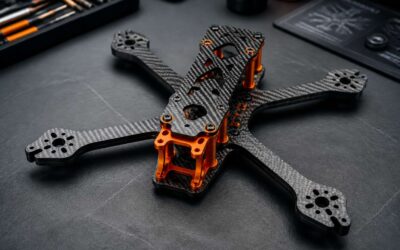
A sturdy quadcopter robot begins with a spine you can trust. The frame must blend rigidity with lightness, so rotor dynamics stay predictable in wind and at speed. Carbon fiber and reinforced aluminum options span the spectrum, with damped mounts to quiet vibrations and protect electronics. Thoughtful weight balance and modularity let teams swap motors, batteries, or sensors without a total rebuild, while spare mounting points keep future upgrades painless.
- Frame geometry and materials choices
- Propeller size versus motor KV pairing
- Mounting options for sensors and payloads
Propulsion follows frame geometry, guiding propeller configurations. The four-arm layout (X or plus) shapes thrust and yaw. Match propeller diameter and pitch to the motor KV and payload; in South African conditions, airflow and heat matter for this quadcopter robot too. Use opposing spin directions to reduce torque, and route wiring to stay clear of moving parts and dust.
Power system and propulsion management
In the South African sun, the powertrain is king. Endurance for a quadcopter robot hinges on how efficiently energy is stored, delivered, and cooled. Heat can shave up to 20% of nominal battery capacity, turning a brisk mission into a slow sprint, as one field engineer warns.
- Battery chemistry and capacity: high-energy density cells paired with a robust BMS
- Cooling and airflow: passive heatsinks and dust-aware cooling paths
- Wiring and connectors: rugged routes with dust protection to sustain reliability
Propulsion integration follows frame geometry—careful motor KV selection, propeller sizing, and ESC pairing keep torque predictable. Route power leads away from moving parts to reduce wear and avoid dust ingress; the system remains a trusted partner in tough SA terrains!
Flight controller selection and sensor suite
In the SA field, the brain counts more than the brawn. Field metrics show up to 30% less drift when the flight controller and sensor suite are tuned for rugged conditions. For a quadcopter robot, the flight controller is the brain—delivering stable hover, crisp responses, and reliable data under dusty South African sun.
Key design choices extend beyond the board. Consider these factors when selecting a flight controller and sensors:
- Firmware maturity and long-term support
- Dust, heat, and vibration tolerance
- Sensor fusion performance and latency
- Power draw and thermal headroom
Balance between modularity and weight matters. A clean, shielded wiring, protected connectors, and a compact form factor keep the quadcopter robot reliable in harsh SA conditions. This setup supports predictable attitude control and trusted sensing across missions.
Structural integration and durability
Core hardware forms the backbone of a field-ready craft. In SA dust and heat, a robust chassis isn’t a luxury—it’s a mandate! Structural integration blends strength, accessibility, and serviceability into one cohesive unit, ensuring the quadcopter robot thrives in rugged environments.
Key considerations for structural integration include the following:
- Shielded enclosures and dust-sealed connectors
- Vibration-damping mounts and rigid frame joints
- Thermal headroom with passive and active cooling
Durability hinges on thoughtful materials, weatherized finishes, and easy field servicing. A careful balance between modularity and weight keeps performance predictable during missions, while robust power rails and protected wiring survive South African dust storms.
Control systems and software for autonomous flight
Flight stability and control algorithms
Across South Africa’s rugged sites, autonomous flight delivers measurable punch: inspections that used to take hours now finish in a fraction of the time, often up to 60% faster. It’s not magic—the quadcopter robot is built to decide how, when, and where to move with calm authority and a wink of swagger!
Control systems and software for autonomous flight form the brain of this technology. They fuse sensor data, run real-time state estimation, and choreograph flight paths without constant human micromanagement.
- Real-time state estimation and sensor fusion
- Adaptive control loops and fault detection
- Autonomous path planning with safe-recovery logic
Flight stability and control algorithms translate that brainpower into smooth, responsive motion. Expect lightweight PID tuning, model predictive control for sharper maneuvers, and robust rotor mixing that keeps yaw predictable in gusts—essential in SA’s dynamic environments.
Sensor fusion and navigation techniques
Across South Africa’s rugged landscapes, autonomous flight is rewriting fieldwork’s tempo. Inspections that once stretched for hours now unfold in minutes, a dramatic shift powered by decisive, autonomous decision making. The quadcopter robot brain fuses sensor streams and charts routes with calm authority and a wink of swagger.
Sensor fusion and navigation techniques form the backbone of confident flight. Real-time state estimation blends IMU, GNSS, and visual data; robust path planning finds safe corridors around obstacles and gusts. In SA’s variable environments, this approach keeps the craft steady, intuitive to operate, and hard to outpace on site.
Autonomy and AI integration for decision making
Autonomous flight slashes field inspection times by up to 70% in South Africa’s rugged terrain, and the quadcopter robot sits at the center of that shift. Control systems and software keep the craft serene under wind gusts and fading light, handling stability, timing, and safety before takeoff. Autonomy and AI integration for decision making let the vehicle weigh routes and risks in real time while operators focus on strategy!
Key software blocks include:
- Onboard autonomy stack for state estimation, planning, and execution
- AI decision modules that adapt routes to wind and payload constraints
- Safety nets: fail-safe protocols and remote override options
Together, these elements empower the quadcopter robot to operate confidently across SA’s varied environments, turning data into actionable insight. The result is a sturdy, adaptable platform for fieldwork and inspection.
Development tools and software workflows
In the breath of the wind, control systems measure, interpret, and reply. The quadcopter robot relies on a disciplined software stack that turns sensor whispers into stable motion—keeping horizon-level balance and rotor harmony even as gusts rise. Teams embrace a simulation-first ethos, with hardware-in-the-loop validation and a steady CI/CD cadence that carries code from prototype to reliable routine.
- Simulation-first development with digital twins and SITL testing
- Hardware-in-the-loop validation to mirror real-world edge cases
- Versioned releases and continuous integration for flight software
- Mission templates and modular behavior blocks to accelerate deployment
From these workflows, the quadcopter robot emerges as a serene field companion, turning heavy data into clean insight.
Safety, failsafes, and regulatory compliance
Control systems are the quiet backbone of autonomous flight. The quadcopter robot rides a disciplined software stack that translates wind whispers into precise rotor adjustments, keeping level horizons and smooth motion even when gusts rise. It’s the difference between choreography and chaos in the air.
- Return-to-home on signal loss
- Low-battery auto-landing and safe hover
- Geofencing and no-fly zone awareness
- Redundant sensors and real-time fault detection
Regulatory compliance threads through every flight, from data handling to operator licensing. In South Africa, that means traceable logs, tamper-evident records, and clear privacy controls for payloads. A mature safety culture turns potential problems into predictable performance for the quadcopter robot.
Applications and use cases across industries
Agriculture and environmental monitoring
From above, the field tells a sharper story, and in South Africa that’s no small thing. As a leading agritech voice puts it, “the sky is the best crop advisor.” Enter the quadcopter robot, turning aerial data into smarter farming decisions for both farmers and conservationists.
In agriculture and environmental monitoring, it shines in several practical ways:
- Precision crop health mapping and nutrient stress detection
- Efficient irrigation management and water resource optimization
- Habitat, wetland, and wildlife surveillance for biodiversity records
These use cases illustrate how a nimble aerial platform can blend productivity with planet-keeping—without the jargon, and with a dash of SA resilience and wit.
Industrial inspection and asset management
Aerial data writes the true story of a site that ground surveys miss. The quadcopter robot offers a fast, safe, above-the-rim view that turns roofs, towers, and yards into actionable insights for South African teams.
Across industries in South Africa, it reshapes industrial inspection and asset management: from mining complexes to power networks, it speeds up checks without risking crews.
- Structural integrity checks on roofs, bridges, and tanks
- Asset inventory and condition monitoring for substations and warehouses
- Hazard mapping and site surveillance for construction and mining sites
Smart data flows into maintenance planning, keeping operations steady in tough conditions.
Delivery and last mile logistics
“Speed is the new safety,” a South African logistics executive quips, and that creed is shaping the way parcels move. In bustling urban corridors and remote townships alike, the quadcopter robot keeps deliveries moving when roads clog and people wait. It’s not just a gadget; it’s a silent, efficient courier that reduces dwell times and minimizes handling damage.
From e-commerce hubs to regional clinics, aerial delivery unlocks the last mile by skipping gridlock and cutting exposure to roadside risks. Real-time tracking, contact-free drops, and on-site visibility help managers plan routes, balance stock, and promise delivery windows with newfound confidence across South Africa’s diverse landscape.
In practice, the applications span:
- Rapid last-mile parcel drops to hard-to-reach settlements
- Inventory checks at depots and cross-docks
- Dynamic route planning with live weather and obstacle data
Public safety and disaster response
Public safety hinges on speed, and a quadcopter robot makes that speed literal. In drills and real deployments across South Africa, aerial scouts slash survey times in chaotic zones—think up to 35% faster in urban disaster scenarios. From wildfire perimeters in the Karoo to flood plains along the coast, these airborne observers deliver live overhead intel, map structural risk, and pinpoint heat signatures without putting responders in harm’s way.
Key applications in public safety and disaster response include:
- Rapid hazard mapping and structural assessment
- Thermal imaging for locating victims and hotspots
- On-scene communication relay and situational awareness
In every scenario, the quadcopter robot amplifies visibility, guiding responders from risk zones to safe paths in real time.


0 Comments