Drone Manufacturing Overview
Product Design and Engineering
Manufacturing a drone is less magic, more mechanical poetry—frames, motors, and brains all tuned to sing in harmony. Even the simplest quad uses around a thousand discrete components, and this is how drones are made: a precise blend of CNC precision, lightweight composites, and firmware that refuses to crash. It’s elegant robustness with a dash of bravado.
From concept to the sky, the core steps look simple on a whiteboard but matter on the factory floor.
- Concept to CAD and simulation
- Prototyping, testing, and iteration
- Final integration, calibration, and QA
That choreography keeps the drone reliable while keeping costs honest.
In South Africa, local suppliers and regional testing grounds shape product design and engineering choices, balancing rugged field demands with safety and regulatory compliance—turning theory into field-ready performers.
Materials Selection and Sourcing
Weight is a quiet tyrant; in how drones are made, every thread of carbon, alloy, and resin decides the weather of flight. In South Africa, the material story unfolds where field testing and local suppliers shape what takes to the air. I see it in every bench test.
Materials selection favors carbon fiber for frames, aluminum for resilience, and heat-tolerant polymers for housings. Local SA mills and regional composites labs keep the supply chain nimble, while thoughtful packaging and adhesives reduce maintenance cycles—proof that crafting flight begins long before the firmware is loaded.
Understanding the process relies on sourcing and compatibility as much as design; every component must speak the same language of performance and safety.
- Local supplier networks
- Certification and testing grounds
- Regulatory compliance and traceability
Component Integration and PCB Layout
“The drone is only as good as its brain,” a designer quipped, and in how drones are made the brain wears the hat. Component integration is where mechanical dreams meet electrical discipline.
We blend frames and PCB cradle design, taming parasitics and keeping signals clear through brackets, antennas, and sensors. Local SA labs and suppliers feed the process with compatible materials and shielding, so flight plans aren’t derailed by hiccups.
Key integration considerations include:
- Power management and battery routing
- EMC shielding and grounding strategy
- Connector standardization and cable routing
PCB layout is the spine of the build: layer stack, trace width, impedance, and thermal vias stitched into a fabric. Place the CPU and sensors with intelligence, route high-speed lines on controlled planes, and run a dashboard of checks before firmware lands.
That’s the craft—precision, performance, and a touch of South African grit that keeps drones singing through testing.
Manufacturing Standards and Compliance
Compliance isn’t a gimmick; it’s the quiet propeller behind every flight. In South Africa, manufacturing standards and regulatory alignment prevent a good design from becoming a costly doorstop. If you’re wondering how drones are made, the answer starts with a robust quality backbone—traceability, risk management, and a clear path for parts sourcing from SA labs and reputable suppliers.
Key pillars keep the wheels turning in the factory and on the flight line. Consider these compliance essentials:
- SACAA airworthiness clearance and operator approvals
- SABS conformity, EMC shielding, and environmental stewardship
- ISO 9001 quality management with supplier audits
- Battery safety testing, labeling, and end-of-life recycling
These checks ensure every build respects South African realities while meeting global expectations, and they keep the drones singing through testing.
Sustainability and Cost Strategies
The air above Cape Town glitters with possibility, and every drone is a story of careful choices. To understand how drones are made, we begin with a mindset: flight-ready performance built on traceable materials, precise assembly, and a respect for South African realities. “Flight begins with a prudent footprint,” a seasoned SA engineer reminds us.
Sustainability and cost strategies thread through every build: modular architectures that let customers upgrade parts, energy-efficient testing, and local sourcing from SA labs and reputable suppliers to reduce supply-chain fatigue. Lifecycle thinking guides supplier audits, and end-of-life recycling keeps the footprint light while preserving power and performance.
Key approaches include:
- Modular design that supports future upgrades and easier maintenance
- Local SA sourcing to shorten lead times and bolster compliance
- Battery lifecycle management to maximize safety and runtime
Frame and Propulsion Systems
Frame Design: Materials and Topologies
Drones breathe through their frame; the rest follows. In the world of how drones are made, frame engineering shapes flight time, resilience, and the rhythm of every maneuver. The frame can account for up to half of flight efficiency variances, a truth South African design studios feel in practice.
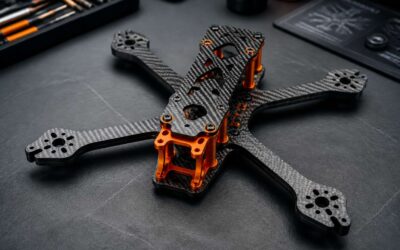
Carbon fiber-reinforced polymers champion lightness and stiffness; aluminum alloys tame cost and machinability. Topologies range from seamed monocoques to open-stage trusses, each influencing how weight distributes, where joints fail, and how the craft handles vibrations. The frame’s arrangement sets the stage for center-of-gravity alignment with payloads and sensors.
- Material choice for stiffness-to-weight balance
- Jointing methods and bonding for durability
- Modular sections for rapid field service
Propulsion threads the frame into motion: motor mounts, propeller clearance, and vibration isolation decide how power lifts the craft. Brushless motors and ESCs thank a well-tuned frame for reliability.
Motor and Propeller Selection
In a sunlit workshop, a drone breathes with every gram saved and every millimeter tuned. Across SA studios, frame-to-propulsion choices can tilt flight efficiency by nearly a third, a reminder that the craft lasts or falters at the chassis. This is how drones are made, from frame to flight, with a quiet arithmetic guiding each build.
Motor mounts kiss the frame, propeller clearance guards every blade, and vibration isolation keeps the ride serene. Brushless motors and ESCs deserve a frame that breathes with them, aligning torque, watts, and weight so power lifts, rather than shoves, the craft.
- Motor Kv and weight balance determine thrust and responsiveness
- Propeller diameter and pitch interplay with RPM and efficiency
- Clearance, wobble control, and vibration isolation protect longevity
- ESC current ratings and battery compatibility keep power clean
Power Architecture and Battery Integration
In a sunlit SA workshop, the power architecture beneath a drone’s skin is the quiet undertow that carries all dreams aloft. This is how drones are made: the frame and energy system breathe as one, weighing the promise of endurance against the mercy of gravity.
From battery chemistry to flight controller, the power path sings a clean, efficient line. We measure capacity, discharge, and fault tolerance like a librarian catalogs relics, because in SA’s heat and glare, that balance keeps the craft serene while every millisecond matters.
- Power distribution and cabling routing through compact rails
- Battery management system balancing and protection
- High-current ESCs matched to the frame topology
Heat sinks, vibration isolation, and thoughtful layout let the machine breathe rather than burn. In this quiet arithmetic, how drones are made becomes a poem of rails and cells, a silhouette against the veld-lit horizon.
Vibration Damping and Structural Testing
Vibration is the silent saboteur—the desert wind in a SA workshop, bending frames and wringing out performance. “Vibration eats components for breakfast,” a lead engineer jokes, and the punchline lands every time when the frame fights for stability. This is how drones are made: the frame and propulsion systems must sing in tune or gravity wins the argument.
Vibration damping and structural testing are the quiet craft behind the roar of flight. Isolation mounts, tuned elastomer pads, and deliberate frame geometry let the machine breathe rather than rattle. Key tests include:
- Modal analysis to map natural frequencies
- Vibration and shock testing across mission profiles
- Thermal cycling and fastener integrity checks
Together, they verify that the silhouette against the veld-lit horizon is not just stylish but steadfast—this is how drones are made.
Durability and IP Considerations
Durability in the frame and propulsion system isn’t an afterthought; it’s the quiet backbone of every flight. In SA’s varied landscapes, frames endure heat, dust, and abrupt landings—the kind of stress tests that separate good machines from legends. The propulsion cluster must withstand vibrations, preserve timing, and deliver precise thrust even as conditions shift. This is how drones are made.
IP considerations hover over every clever twist and carbon weave. Protection isn’t merely about legal walls; it’s about locking in performance and encouraging responsible collaboration.
- Patents securing core frame geometries and mounting concepts
- Trade secrets guarding firmware, control algorithms, and calibration data
- Licensing strategies that balance access with safety and compliance
From field testing to final assembly, we see every bolt and bearing carry not just engineering weight but a promise of reliability. The result is a platform that respects both rugged reality and the intellectual property that guards its ingenuity.
Avionics and Control Systems
Flight Controller and Sensors Integration
SA’s drone scene hums with potential, and the avionics crown the craft. A seasoned technician likes to say, ‘Your drone’s soul sits in the flight controller and the sensors!’ This is how drones are made.
The heart of control systems rests on three pillars:
- Flight controller and firmware: real-time processing, safe boot, rigorous interrupts.
- Sensor fusion: IMU, GNSS, barometer, vision systems, calibration loops.
- Redundancy and fault tolerance: dual paths, watchdogs, graceful fail-safes.
With this architecture, the flight controller orchestrates stabilization, navigation, and communications, translating scattered data into reliable performance—crucial for SA’s demanding airspace.
Communication Protocols and Telemetry
Across South Africa’s growing drone economy, every heartbeat of data matters—the telemetry link often determines a mission’s fate. Telemetry reliability now routinely exceeds 99.9% in well-tuned designs. MAVLink anchors command and control, while CAN bus stitches sensors and actuators into a resilient backbone. High-speed serial links carry time-sensitive frames, and I2C and SPI bridge peripheral devices to the flight computer. GNSS, IMU, barometer, and vision data are time-stamped and fused for stable attitude and precise positioning in SA’s busy airspace.
Core choices and flow ensure robust operation:
- MAVLink for command and control
- CAN bus for deterministic sensor-actuator networks
- Serial, SPI, and I2C bridges for peripherals
This is how drones are made.
Autonomy Software and Flight Modes
In SA’s drone labs, avionics are the quiet engine behind every mission. Autonomy software threads perception, decision, and control into a single, obedient brain—no shouting matches, just smooth slewing through air. “Autonomy is a craft in the machine,” a senior engineer likes to say. This is how drones are made—rigidly modular, delightfully resilient, and just a little bit cheeky when things go as planned.
- GPS Hold
- Waypoint Navigation
- Return-to-Home
The flight modes empower the system to adapt on the wing, from steady hover to complex missions, while the autonomy stack keeps transitions safe and predictable in crowded skies.
Safety Features and Redundancy
Avionics are the quiet guardians of every mission—precision where the wings meet the wind. “Redundancy is the quiet guardian of this craft,” a lead avionics engineer likes to say, and the effect is tangible: drones behave when the air goes rogue, not improvise chaos. I’ve seen the difference in the lab when a sensor drifts and the system calmly corrects.
- Dual, independently powered flight controllers
- Cross-checked sensors and health monitoring
- Fail-safe modes including Return-to-Home and geofence awareness
- Secure boot, encrypted data paths, watchdog timers
All told, these choices illuminate how drones are made, with layered redundancy, fault-tolerant buses, and surgical isolation between flight-critical and nonessential systems. In SA skies, that calm reliability is what keeps missions moving when deadlines loom and wind picks up.
EMI/EMC and Electronic Shielding
EMI and EMC aren’t glamorous, but they’re the reason a drone doesn’t turn into a chaotic kite when the wind howls—this is how drones are made to endure it. In the avionics core, shielding keeps signals pristine as components share a crowded cockpit. Proper routing and deliberate separation between flight-critical and nonessential systems transform potential chaos into calm, a comfort in SA skies.
Shielding isn’t cosmetic; it’s a system with heft. Techniques span Faraday enclosures, shielded cables, and careful grounding. Essentials, listed here, keep the flight steady as interference booms:
- Faraday cages and shielded enclosures for the flight computer
- Shielded cables and guarded connectors to prevent crosstalk
- Careful grounding topology and star grounding to avoid ground loops
- On-board EMI testing and tuning during integration
Together, these choices show why drones stay reliable in busy skies and radio chatter, keeping the mission on course when interference bites.
Manufacturing Processes and Quality Assurance
From Prototyping to Production Lines
A well-tuned prototype-to-production handoff cuts post-launch failures by up to 40%. Understanding how drones are made begins with a crisp handoff from prototype to line, where a design is translated into repeatable processes. Small teams add traceable steps and built-in checks to catch early slip-ups. In South Africa’s markets, the emphasis on reliability translates into robust testing and clear documentation.
- Prototype validation and rapid iteration on test rigs
- Pilot production with process capability studies
- Full-scale production with inline quality gates and traceability
Quality assurance runs through every stage: automated inspection of assemblies, dimensional checks, power and battery tests, and flight-ready calibration. Data from each batch feeds a traceability ledger, helping capture root causes before they become field issues. The result is drones built for consistency, not quirks, even in the rugged environments of South Africa.
Automation and Assembly Techniques
Across the industry, a crisp prototype-to-production handoff cuts post-launch failures by as much as 40%.
Manufacturing the modern drone blends precision robotics with disciplined process control. In South Africa’s markets, reliability is the benchmark, achieved through automated assembly lines, inline quality gates, and an immutable traceability trail. Understanding how drones are made reveals a choreography of repeatable steps rather than a guesswork sprint toward production.
- Automated assembly rigs mount frames, power systems and sensors with surgical precision
- Inline metrology and dimensional checks ensure components align before flight testing
- Data-rich traceability ledger captures batch history for root-cause analysis
Quality assurance runs through every stage, powered by automated inspection of assemblies, battery health checks, and calibrated flight-ready tests. In this way, the line becomes a living ledger—correction before field issues, consistency over quirks, especially in demanding SA environments.
Quality Control Methods and Testing Protocols
Manufacturing processes hinge on standardized work, fixtured assembly, and disciplined process control. Understanding how drones are made reveals a choreography of repeatable steps rather than a sprint to the finish line, tuned to South Africa’s rugged conditions.
Quality assurance codifies this discipline with checks that ride along every unit, from raw materials to flight-ready status.
- On-board cameras and optical checks catch misalignments at key joints
- Battery endurance tests using charge-discharge cycles and health metrics
- End-of-line flight simulations that validate control responses and stability
Testing protocols stretch beyond the belt: environmental conditioning, thermal profiling, and vibration endurance tests ensure resilience on dusty veld and coastal humidity. A robust traceability trail makes any anomaly traceable to its source.
Traceability and Documentation
On a factory floor at dawn, the loom of order conquers the quiet. A drone slides from the line as if stepping from rumor into air, its spine a braid of controlled steps. “Quality is a ledger,” the foreman says, and the phrase clings like frost. I listen to the quiet hiss of sensors as the assembly tightens—how drones are made—this is a map of ritual, not a sprint—from raw elements to flight-ready form, with every bolt numbered and every weld logged!
- Batch history and supplier certificates
- Time-stamped assembly, calibration, and QA records
- Digital test certificates and flight readiness signatures
These records form a living, auditable trail; in South Africa’s markets and skies, it is the quiet spine of trust—where documentation and procedure become the drone’s second consciousness.
Cost Optimization and Yield Improvement
On the factory floor, the discipline of assembly reveals how drones are made as a story of controlled steps. In South Africa’s production lines, a small efficiency gain—just 1%—often comes from better alignment between buying, kitting, and first-pass testing. Standardized work and modular fixtures reduce drift from one unit to the next, turning complexity into predictable performance.
Quality Assurance and cost optimization go hand in hand. Real-time monitoring catches drift before it ripples into waste; predictive maintenance shrinks downtime; and lean inspection reduces rework. The yield improves when every touchpoint—wiring, bonding, calibration—has a documented, repeatable method, producing flight-ready drones with fewer surprises.
- Inline SPC dashboards and real-time analytics
- Predictive maintenance scheduling
- Documented acceptance tests
Regulatory, Ethics, and Market Readiness
Certification Standards for Drones
In South Africa, how drones are made isn’t just about clever frames and cleverer code—it’s about the paperwork that keeps the sky honest. A clean regulatory backbone is what separates weekend flyers from fleets that actually fly big jobs.
Regulatory, Ethics, and Market Readiness Certification Standards for Drones demand more than a pulse on the throttle. In SA, SACAA Part 101, remote pilot licensing, and airspace approvals shape who can fly what, where, and for how long.
- Licensing alignment with local operators
- Privacy-by-design for payloads and data handling
- Post-market traceability and safety reporting
Market readiness certification standards ensure drones are not only capable but reliable across South Africa’s rugged terrain. Certification pathways cover equipment safety, production surveillance, and post-market monitoring, often aligning with SABS standards and SACAA oversight to guarantee airworthiness in diverse operating environments.
Compliance with Airspace and Privacy Laws
Skies don’t lie in South Africa—the difference between a hobbyist flyer and a fleet that actually flies rests on a single, well-kept ledger line!
The phrase how drones are made guides the compass of operation, where airspace approvals and privacy-by-design commitments live with every payload and data stream.
- Airspace approvals and remote-pilot licensing
- Privacy-by-design for payloads and data handling
- Post-market traceability and safety reporting
Market readiness underpins reliability across SA’s rugged terrain, ensuring airworthiness in diverse environments and aligning with SABS standards and SACAA oversight.
Safety Certifications and End-User Training
In South Africa, approvals are the engine behind take-off. SACAA oversight and SABS standards aren’t ornament; they’re the jumpstart wires in every prototype. Understanding how drones are made means tracing airspace permissions, remote-pilot licensing, and privacy-by-design into every mission.
Ethics isn’t an afterthought when payloads become data streams. Privacy-by-design for payloads and data handling must ride shotgun with every flight, and consent and minimization should be woven into the system from first power-on. These non-negotiables guide every mission.
Market readiness and end-user training seal the deal. A drone that passes labs and field tests still needs operators who can read the wind and the regulations. Training programs endorsed by SACAA, paired with safety certifications and post-market reporting channels, keep the fleet reliable in SA’s rugged terrain.
Sustainability and End-of-Life Considerations
Regulatory clarity is the wind that lifts every drone from bench to sky. In South Africa, airspace permissions, remote-pilot licensing, and privacy-by-design aren’t add-ons; they’re the framework that makes a prototype take flight. Understanding how drones are made means tracing these threads from concept to field test.
- Regulatory frameworks and airspace rights
- Licensing and operator qualifications
- Privacy-by-design integrated into payloads
Ethics isn’t a cloak but a compass. Payload privacy, data minimization, and consent must ride shotgun with every flight. In practice, that means encrypted data paths, on-board processing to limit capture, and clear governance that governs who sees what, and when.
Market readiness and sustainability meet on the factory floor and in the field. Trained operators, robust reporting channels, and thoughtful end-of-life planning keep SA skies reliable. how drones are made seeks recyclability and take-back programs that honor tomorrow as well as today.
Market Trends and Competitive Analysis
In South Africa, drone-enabled inspections cut downtime by up to 30% in key sectors, a striking glimpse into how drones are made—from airframe resilience to privacy-aware payloads. Regulatory clarity becomes the wind beneath a prototype’s wings, turning bench tests into field flights with confidence. This is how drones are made in practice, from design to deployment.
Ethics is a compass, not a cloak. Data minimization, consent, and encrypted paths ride into every flight, keeping trust intact. On-board processing and governance decide who sees what, when, while preserving speed.
Market readiness in SA hinges on trained operators and robust reporting. Market trends show fierce competition between local ateliers and global players. From modular payloads to service networks, the fight is about value, speed, and sustainability.
- Agriculture and mining demand tailored payloads
- Take-back programs boost circularity
- Privacy-by-design payloads differentiate offerings


0 Comments